post

Golf Poetry and the Promotion of Pain Remedies

In the 1650 edition of his book  Hesperides, the English poet Robert Herrick included this short poem.

NO PAINS, NO GAINS.

If little labour, little are our gains:
Man’s fortunes are according to his pains

“No pain, no gain,” right or wrong, has been celebrated in all sports. In golf consider Mark Reason’s comment on Tiger Wood’s 2008 U.S. Open win:

It is surely the single greatest sporting achievement of all time. The man could barely stand. His left knee was like tangled spaghetti. His tibia was fractured in two places. Yet Woods beat the world’s best standing on one leg.

But pain not only brings gain, it also brings products to treat it and training methods to avoid it. Here is part of a Q & A with the professional golfer Ray Floyd in November 1996:

Q. At the Vantage you said you were pain-free for the first time in a long time. Is that still the case?

RAYMOND FLOYD: Absolutely. I am now taking just my three Advil a day and that is terrific.

However, Advil has its detractors. This is from a recent Internet ad for Flexcin, a joint inflammation treatment for “golfer’s elbow,” among other ailments:

Are you popping Ibuprofen or Aleve just to keep participating? You know it’s not good for you. . . . Now with Flexcin, there’s an alternative that is permanent! Try Flexcin and become active again.

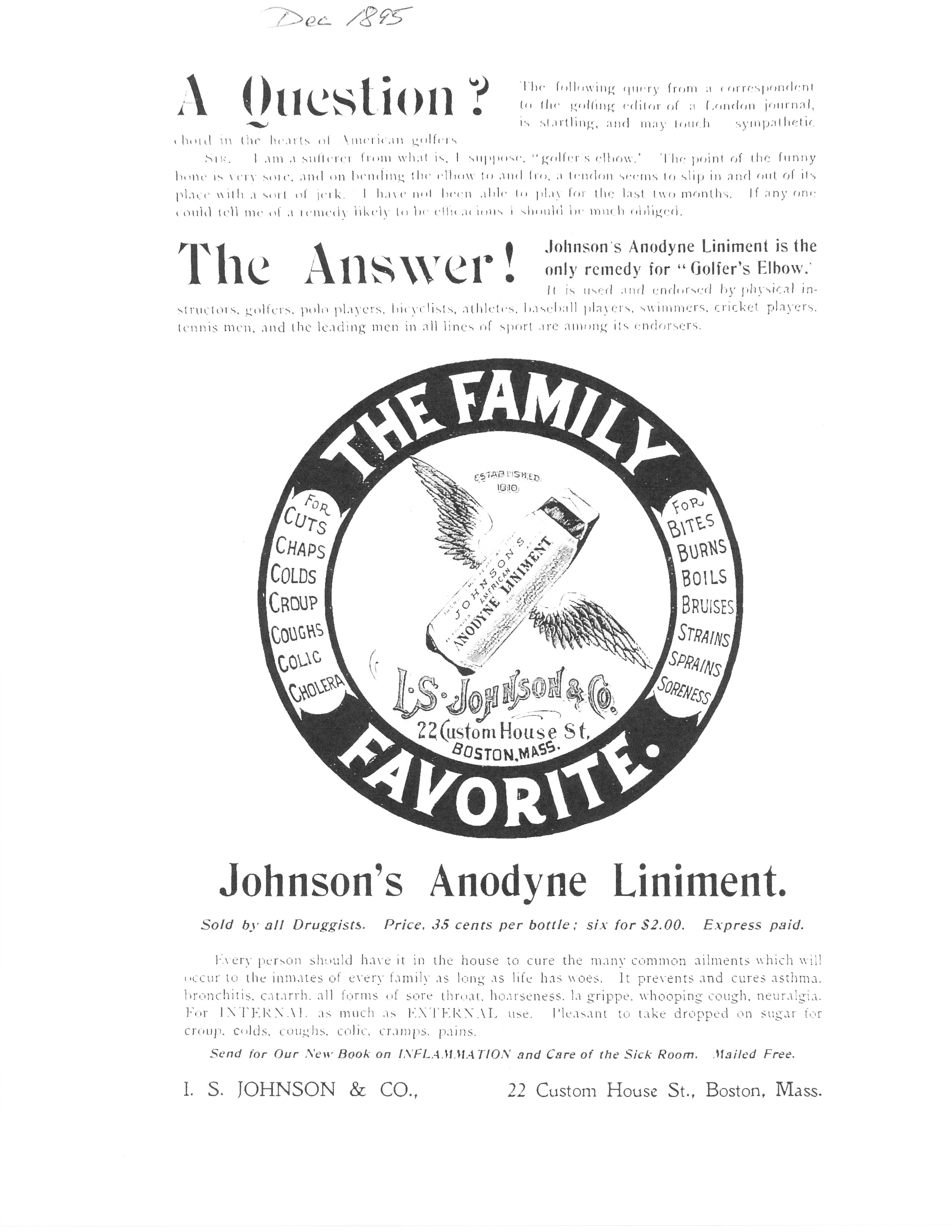
Golfers who played over 100 years ago and read The Golfer magazine (10 cents an issue, a dollar a year), were regularly regaled with ads, some of them in verse, for Johnson’s Anodyne Liniment (that also targeted “golfer’s elbow” as in the ad above). (See  an earlier Post for details.) Now I have found that Johnson’s went even further to promote its product. The April 1898 issue of The Golfer included a full page poem by an anonymous poet, which can only be described as an unabashed endorsement for Johnson’s Liniment! This “epic poem” matches “Grim Pain” against “The Knight of the Links.” Read on (preferably out-loud) to find out who this heroic Knight was.

The Knight of the Links

Grim Pain appeared on the Links one day,
To find a foe who could say him nay;
He had fought with many, had conquered all,
And now he would tackle, the “gay Golf ball.”

But an old-time warrior who bore the seal,
Of public approval on burnished steel;
Threw down the gauntlet to Pain and said,
“You will fight with me this day instead.”

“I have only to cross his steel, thought Pain,
When he will be numbered among the slain;
He may try to win, but I shall write
One conquest more on my tablet to-night.”

Pain had harrowed Golfers with fever of fire,
He had vexed their joints in his devilish ire,
Had strained their muscles, and made them sore
With bruise “Golf arm” and aches by the score.

Now where e’er he struck, this Knight of old
Parried his thrusts and defied his hold;
Then Golfers arose and laughed him to scorn,
“Hail, Knight of the Links! Pain’s power is gone.”

Then Pain gave up the unequal fight,
For the Golfer’s arm was cured quite,
The Knight which kind fortune to him had sent,
Was called “Johnson’s Anodyne Liniment.”

Apparently Johnson’s lived on for many years. However, in 1932 its advertising claims were found to be fraudulent by the Food and Drug Administration. The Knight was finally stripped of its armour.

post

Golf Opposites

One suggestion often given to new golfers is to learn by studying what a good professional does when practicing or playing. Learning from the pros extends to poetry. I often get ideas from the best poets. For example, I recently began to read the poetry of Richard Wilbur, one of the great 20th century American poets. Among the many, many poems Wilbur has written, he wrote a series of word-play poems having to do with opposites. Here is a short example (more can be found in his book, Collected Poems 1943 – 2004):

The opposite of doughnut? Wait
A minute while I meditate.
This isn’t easy. Ah, I’ve found it!
A cookie with a hole around it.

Taking Wilbur’s idea as a starting point, I wrote two golf “opposite” poems.

CLUB AND BALL

What is the opposite of club?
It might be ball, but there’s a rub.
If you don’t hit it well enough,
The opposite of club is muff!

HOME AND AWAY

The opposite of away is home;
That wouldn’t crack a putter’s dome.
But if you’re away and in a match,
Then I would say there is a catch.
You putt first and so recast,
The opposite of away is last!

Leon S. White, PhD

post

Match Play Golf Poetry

The Ryder Cup is a match play event. Several earlier Posts deal with match play poetically. For example, The Language of Match Play in 1504 and More Match Play Poetry. For others, go to the search box and enter “match play.”


post

A Poem for the Avid Golfer

Here is a poem that should make any avid golfer smile and nod in agreement:

A LITTLE

A little learning so ’tis said,
Is dangerous for any head. .
A little wisdom, tipped with wit,
Will rarely fail to make a hit.
A little golf, ’twas said of late,
Will benefit the delicate.
At which some wise one had his fling:
“A little golf? There’s no such thing.”

Francis B. Keene.

For the avid golfer, the feelings expressed in these eight lines are easy to identify with. What might be surprising is that Francis Keene published this poem in the March 1900 issue of the magazine Golf.

Golf has change a lot in the last 110 years. No one will argue with that statement. But what the old poems featured in this Blog show, often with eloquence and wit, is that the feelings of a true golfer, who loves playing the game, have changed very little over time.


post

The Rules of Golf

All of the recent golf rules violations inspired me to write the following poem:

THE RULE OF GOLF

The Rules of Golf are not to be broken;
Nevertheless, sometimes they are,
By Pros who should know when to invoke them,
Even when they are close to bizarre.

There are Rules for playing the ball as it lies,
And Rules that relate to the putting green,
Rules for a ball, moved, deflected or stopped,
And others related to “lift, place and clean.”

The Rule Book’s first subject, Etiquette,
Says bunker raking should be in your plans,
But that brings up a delicate subject:
What if no rake and the prints made by fans?

Remember that towel? An unneeded addition,
Placed on the ground somewhat in advance
Of a shot hit from a kneeling position,
For which Stadler got caught for “building a stance.”

And what of the famous scorecard debacle,
When De Vicenzo got himself in a jam.
Caught up in the moment, he missed the error,
His quote when informed, “What a stupid I am…”

After Inkster, call it the doughnut rule,
Which has nothing to do with bringing ’em.
But if you’re a Pro, waiting out a delay,
Better refrain from swinging ’em!

“Local” rules may also exist.
Just like the rest, they couldn’t be clearer,
Except when the Pros fail to peruse them,
Because they are posted on some bathroom mirror.

Surely the Pros know the rules in the Rule Book
Still they get DQ’ed for the craziest things.
The lastest poor Furyk, late for a Pro/Am
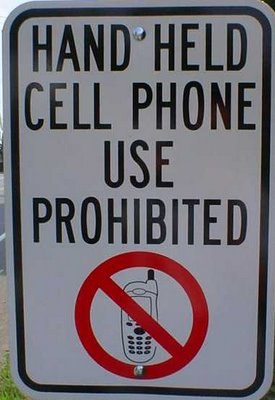
When his cell phone alarm logged zero rings!

Penalties are sometimes imposed by officials,
Walking along and right on the scene.
But now they are aided by enterprising viewers,
Vigilantes with Rule Books watching the screen.

Has all this complexity made the game better?
Maybe the Rules need some serious rethinking.
In the early days, thirteen were plenty,
A judicious review might lead to some shrinking!

Leon S White, PhD
September, 2010

post

Tiger Twines

Over the last nine months or so, I have “covered” the Tiger stories with Twines, two line poems for Twitter. Now that at least one story has ended, I put nine of the Twines together:

Second thoughts Twine:

Had Tiger come clean before being hounded,
Could he have escaped without being pounded?

Where’s Tiger Indefinitely Twine:

Tiger’s missing from the scene,
What does “indefinite” really mean?

Endless Tiger Story Twine:

The media still feeds off Tiger’s sad tale,
But the word stew they offer is turning quite stale.

A Tiger Hater Twine:

He swings at Tiger as he would a golf ball,
What drives him has no sweet spot at all.

Tiger Returns Twine:

With Tiger’s announcement the suspense is suspended,
His “indefinite” leave is definitely ended.

Masters 2010 Twine:

The joy of golf is finally back,
Tiger’s in and again chasing Jack

The Canadian Doctor and Swing Doctor Twine:

Tiger’s bulging, Haney’s out
Twitterers have more to twit about.

Tiger’s On Course Troubles Twine:

Speculation is the game, sports writers love to play
And with Tiger now a duffer, they are having a field day.

Tiger Divorce Twine:

Now it’s over, the marriage’s busted
What’s Tiger left with – a swing untrusted.

All in all, a sad story.

post

D.J. and M.K. at the 2010 PGA Championship – Two Clerihews

As all golf fans know, Dustin Johnson, the talented but inexperienced professional, has had his problems with the Majors this year. In June, at the U.S. Open, he led going into the last round and then skied to an 82, losing his chance to win. And in this year’s last major, the PGA Championship, leading by a shot on the last hole, he incurred a two stroke penalty for grounding his club in a bunker, and again lost any chance to win.

Johnson’s Major travails deserve to be remembered in a Clerihew. A Clerihew is  particular kind of a four line poem, named for its inventor, Edmund Clerihew Bentley. In an earlier Post, I described the characteristics of a Clerihew:

Clerihews are four line verses of the form aabb, in other words, the first and second lines rhyme as do the third and fourth. Beyond their rhyming scheme, Clerihews have a particular structure and purpose. Each focuses on one or more aspects of  the life and/or the works of a famous person while allowing for, better yet encouraging, overstatement, distortion and humor. It is also a requirement that the first line of a Clerihew begin or end with the person’s name.

So here is my Clerihew for Dustin Johnson:

D.J. at the PGA Championship

Dustin Johnson, D.J.to some,
Is likely feeling pretty glum.
He grounded his club in a trap unknown,
The result – another Major blown!

But what about the winner, Martin Kaymer? He deserves a Clerihew as well . . . and may need it to be remembered! So here is his:

Martin Kaymer – The Guy who Won

Martin Kaymer,
A Major first timer.
His win eclipsed by an unfortunate flap,
When the leader on 18 was caught in a trap!

Hopefully, both with have unclouded Major victories in the future.

post

Two Up on Grantland Rice

Grantland Rice, in his book, the duffer’s handbook of golf, includes a page of  humorous “sayings” under the title, “Short Approaches.” I took two of them, “If at first you don’t succeed, try looking at the ball,” and “He who swings and lifts his head, will say things better left unsaid,” and made four line verses out of them.

GOLF OR BOWLING

If at first you don’t succeed,
Try looking at the ball.
But if that doesn’t work for you
Try bowling or the crawl.

NOT FOR ATTRIBUTION

He who swings and lifts his head
Will say things better left unsaid.
He whose putting’s for the birds
Will likely echo the former’s words.

If you would like to try your hand at extending a Twine (a two line poem), try the following:

To be in the hole and not in a rut
With a short one left, don’t rush your putt.

Add a comment with your finishing two lines and thanks.

post

Silent Cellphones Welcome at Wyndham Championship

Not This Week!

The August 9th issue of GolfWorld Magazine includes the headline “PGA Tour to give cell phones a listen.” The story relates that this month’s Wyndham Championship (previously called the Greater Greensboro Open) will allow spectators to bring in cell phones. However, the phones must be left in silent mode and calls must be made in designated areas only. As they say on the radio from time to time, “This is a test.” What I say is “Good luck.”

This story allows me to share a poem I wrote a while ago called “Cellphone-itis.”

Cellphone-itis

Before the cell phone came to town
Calls were made with care
Phone booths now have emptied out
The cell is everywhere

Its use has borne an odd disease
Known as cellphone-itis
The symptoms are the opposite
Of simple laryngitis.

To have their voices clearly heard
When calling on a cell
Users seem to be agreed
That they must always yell.

But for their captive listeners
These polluters are no joke
What they add to the environment
Is matched only by second hand smoke.

So now that the ban on cellphones has been lifted, will the PGA Tour consider a ban on on-course smoking?

post

A Wife’s Place in the Golf World of 1886

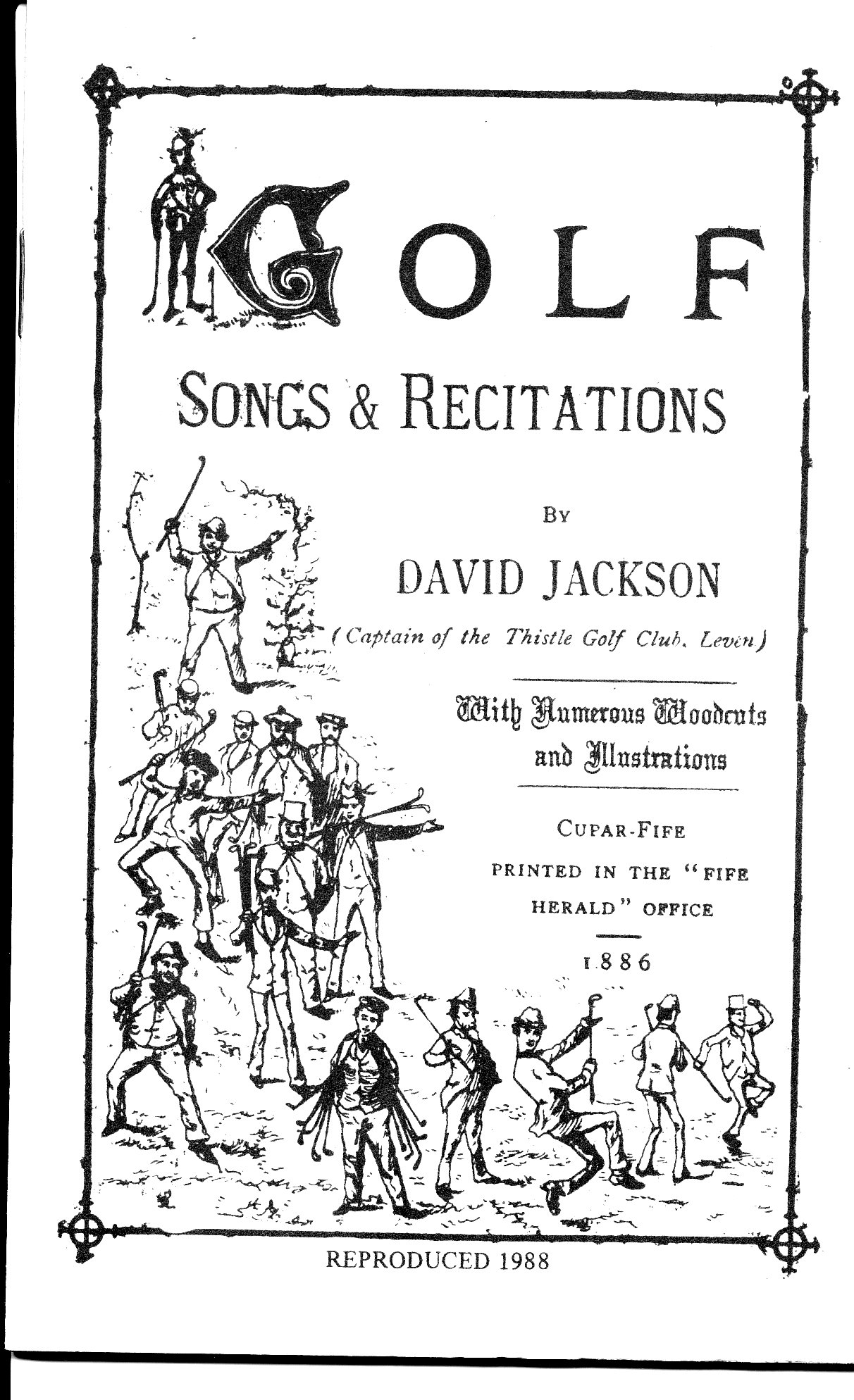
Last November I wrote a Post that included a poem from the Captain of the Thistle Golf Club, David Jackson. The poem came from a 32 page book called Golf Songs & Recitations published in 1886. In my November Post I said that the book was not available in any library. I have since learned that one copy exists in the library of the University of British Columbia. I managed to find a 1988 reproduction of the book.

I picked up Jackson’s book again recently and found a relatively short epic poem called “The Breaking O’ the Clubs.” The poem describes the tensions that golf created between a man and his wife in the 1880’s when golf was becoming more popular among the rank and file. In writing the poem, Jackson used some Scottish dialect which I have tried to translate using Internet sources. The poem is interesting both for its lively content and its “happy” ending.

THE BREAKING O’ THE CLUBS

Ae nicht (One night) I had a round at Gouff wi’ my cronies, Bob and Tam,
When we were through, to weet our mou’, some ane (one) proposed a dram;
Sae down we sat, and had a chat about our Drives and Putting—
Wi’ (with) joke and sang, it wisna lang till it was time for shutting.
Then hame I goes on my tiptoes, but ah! the wife was waken.
“The morn,” she cries, “afore ye rise, I’ll ha’e yer Clubs a’ (all) broken;
Ye gang tae (go to) Gouff, it’s a’ your houff, and then ye maun (must) be drinking,
Some morning when ye canna rise, ye’ll get the sack, I’m thinking;
Whaur wull you be, the bairns (children) and me—oh, man, ye should think shame,
If I should rise and break yer Clubs, I woudna be to blame.”
To bed I sprung, and held my tongue, thinks I before the morrie,
For a’ this lung and words high-strung she surely will be sorry.

When morning dawned, I wakened, yawned, was pulling on a stockin’,
When horrors, a’! what was I saw – my Clubs and Cleeks a’ broken.
As guid (good) a Club as e’er was swung, I won at last Spring Meetin’,
My driving Cleek, my lofting Iron, a’ tools that ne’er were beaten,
How aft I’ve praised their style o’ mak’, and rubbed wi’ oil their handle,
It’s quite enough to drive me mad, and raise a perfit scandal.
I fumed and swore, and loud did roar, and kicked up such a shindy
The neebors gathered round the door, and some glowered through the window.

“Shall I give up the Gouff for this, and frae (from) my Clubmates sever,
I tell ye plainly to yer face ye needna think it—never;
Fareweel to a’, for I’m awa, my peace wi’ you is ended,
Unless ye gang (go) this very day, and get thae Clubs a’ mended.”
I left the house in awful scorn, their cries to come back spurning,
My heart wi’ grief and anger torn, my brain wi’ rage near turning.
That was a dull and dreary day, to breathe seemed quite a labour,
I coudna sing a lilt, or say a word to my next neebor.
When I came hame frae wark that night, my heart a’ wives reviling
Wha’s (Whose) was the first that met my sicht—my ain (own) and she was smiling.
“Oh, come awa, I’m awfu’ glad that this long day is ended,
For I ha’e been at Patrick’s, lad, and got yer Clubs a’ mended;
And there’s a Club I bought for you – he said ’twas special made, man,
The wale (choice) o’ wud, a powerfu’ shaft, and bonnie driving head, man.
Forgi’e me noo.” “I will, my doo.” And bright her face did shine;
And ever since ye coudna ha’e a better wife than mine.

Though somewhat over the top, this story is probably representative of male golfers’ attitudes in the 1880’s.