post

Where is Johnson’s Anodyne Liniment When Tiger Needs It?

The cartoon above filled the upper half of a full page ad that appeared in the April 1896 issue of The Golfer magazine. (Notice that “Anodyne” was misspelled. The word “anodyne” means anything that relieves distress or pain.) To sell the product the Johnson’s folks included the following eight line poem that appeared below the cartoon: (Spalding also used poetry to sell golf balls. See the Post called “Golf Ball Poetry.”)

When players versed in golfing lore,
Discuss the technique of their score,
And talk of putting, bunker, fore,
Let us suggest to them one more.

“Tis Golfer’s Elbow…and ten to nine,
We can make a cure
That is prompt and sure,—
A Liniment called Johnson’s Anodyne.

Below the poetry was the following statement:

It soothes every ache, every bruise, every cramp, every irritation, every lameness, every swelling everywhere, and speedily relieves and cures every ailment caused by inflammation. It is for INTERNAL as much as EXTERNAL use. It was originated in 1810, by Dr. A. Johnson, an old family physician, for his own practice. It is used and endorsed by athletes everywhere.

So Tiger, now that you have your MRI results, just get a few bottles of Johnson’s Anodyne, rub some on your neck, drink the rest and you should be hitting them long and straight in no time!

(Actually, according to an entry in the American Medical Association Journal (Vol. 101 # 4), Johnson’s Anodyne Liniment contained ” Alcohol (14.8 per cent), a fatty oil, oils of turpentine and camphor, ammonia, ether and water.” And its advertising claims were found to be fraudulent by the Food and Drug Administration in 1932.  So Tiger, maybe forget the advice and good luck with your treatment.)

post

The Prime Minister (to be) is on the First Tee

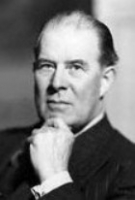
Arthur J. Balfour (1848 – 1930) was a lifetime professional politician and a long time avid amateur golfer, which left him little time for anything else. He was Captain of the North Berwick club, 1891-92 and Captain of the Royal and Ancient Club of St. Andrews a few years later. He was called by some “the father of English golf,” most likely for his strenuous efforts to promote the game. The high point of his 50 year political career was his time as Prime Minister of the U.K. from 1902 – 1905. Earlier as the cartoon indicates, he was Irish Secretary. He was first known as a renowned philosopher, publishing A Defence of Philosophic DoubtThe Foundations of Belief , and Theism and Humanism .

Balfour the golfer (and philosopher) once wrote:

A tolerable day, a tolerable green, a tolerable opponent, supply, or ought to supply, all that any reasonably constituted human being should require in the way of entertainment. With a fine sea-view, and a clear course in front of him, the golfer should find no difficulty in dismissing all worries from his mind, and regarding golf, even , it may be, very indifferent golf, as the true and adequate end of man’s existence.

In 1894 when Captain of the R & A and following its traditions, Balfour drove off the opening ball at the Autumn Golf Meeting with his friend Tom Morris nearby. Balfour commemorated this event with a poem that will appeal to all golfers who harbor first tee trepidations.

A REAL POLITICAL CRISIS

The crisis came, at that wave-beaten place
Men called Saint Andrews in the golfing years;
Tom Morris watched me with an anxious face,
I, full of nervous fears.

Addressed the ball: the crowd had swelled in size:
Behind the ropes I saw; though scarce alive,
The stern tweed-coated men, with golfish eyes,
Waiting to see me drive.

The feat is far less easy than it seems,
Despite the rival politician’s scoff;
Indeed I marvelled what ambitious dreams
Had tempted me to golf.

For I remembered tee-shots toed and topped,
Sad moments, when the driver firmly clutched
Had done its utmost, yet the ball had stopped
Upon the tee, untouched.

This, after all, is merit’s actual test,
I thought, and other laurels matter not,
For no distinguished man can look his best
After a foozled shot.

Still, let me strike, I said, and gathered heart;
Then, with my eye fixed firmly on the ball—
That earliest canon of the Royal Art—
Drove off—and that was all.

post

Michelle Wie and other Clerihews

E. C. Bentley

Clerihews are four line poems in the form aabb, were the first two lines rhyme as do lines three and four. Furthermore, the first line of a Clerihew begins or ends with a person’s name and the poem focuses on some aspect of his or her life. Of course, there can be variations of this idea. As I explained in an earlier Post, Clerihews are named for their inventor, Edmund Clerihew Bentley (1875 -1956), an English journalist and writer.

As examples, here are a few Clerihews that I wrote:

Harvey Penick

Harvey Penick
(Rhymes with scenic)
His claim to fame:
“Take dead aim.”

Jack Nicklaus

Jack Nicklaus (the Golden Bear)
Pudgy in profile with blondish hair
Left opponents in the dust
With his putting, most robust.

Vardon, Taylor and Braid

Vardon, Taylor and Braid
“The great Triumvirate” so portrayed
In tournaments, to their competitors’ chagrin
One of the three would usually win.

Miclelle Wie

Michelle Wie
May still want to see
If there is a chance
To beat pros who wear pants.

If you are so inclined, try your hand at writing a golf Clerihew and leave it as a comment below.

post

Ted Ray’s Golf Swing


The question “What’s wrong with his/her golf swing?”  is often answered today by looking at slow motion video. But the question goes back long before video analysis. It was raised with regard to Ted Ray’s swing shortly after he had participated in the famous 1913 U.S. Open won by Francis Ouimet.

The November 1913 issue of The American Golfer included the following short item titled “Ray’s ‘Sway'”:

Ray comes to us with the reputation of swaying on his up-stroke. Ray does not sway—and we have observed him very closely. What he does is this: Just after the backswing starts the weight is transferred to the right leg; then, about half way up the swing the left shoulder is dropped more or less—a movement in contradistinction to, and offsetting, the first, but to the uninitiated eye, giving every appearance of a sway. The first puts the body weight where it properly belongs—back of the ball—the second enables the arms to complete the upswing. The bending of the knees, more especially the right one, outwardly, creates the false impression of a body sway. It is a sort of leaning in to the ball. Not “according to Hoyle” perhaps, but mighty effective—in Ray’s case.

If you didn’t know, you would have thought that Johnny Miller wrote this! But this was a note in a 1913 golf magazine. And so, not unexpectedly, a short poem was also included:

OH! SAY

Oh! tell us Teddy—Teddy Ray,
Tell us truly, we do pray—
If as some are wont to say,
You do really, really sway.

We ourselves incline that way;
But that is not the proper way,
Our friends inform us day by day
When at the 19th hole we pay.

HIP-HIP-HOO-RAY

Does Ray sway?
Ray does not sway.
He leans; which means
Ray does not sway.

Ray was known for his portly build and prodigious length off the tee, though his ball often landed in awful lies. His recovery powers were said to be phenomenal and cartoonists usually caricatured him with a niblick in hand, festooned with clumps of heather and saplings, with an inseparable pipe clamped between his teeth. During his career he won the 1912 British Open and the 1920 U.S. Open.

post

A Springtime Exchange Between a Golf Poet and his Editor

Robert K. Risk's book, Songs of the Links (1919), includes the following timely exchange between Risk, the golf poet, and and Garden G. Smith (1860-1913) the editor of Golf Illustrated, the British weekly, for many years and an important contributor to the literature of the game. (Risk's poem has been slightly shortened.)

TO THE EDITOR

Bid me write and I will write
Of club and ball and tee,
Trusting the matter I indite
Will be approved by thee.

Bid me to stay my pen and I
Will muzzle it with grace,
Regarding not impatiently
Regretted "lack of space."

But when you hint that I should do
Some verse concerning Spring,
That, I must frankly caution you,
Is quite another thing.

Although not disinclined to sing,
No poet can ignore
That all that can be sung of Spring
Has been well sung before.

Therefore, should I to platitude
And outworn phrase incline,
The brickbats thrown by readers rude
Are yours, dear sir, not mine.

In Spring we walk the daisied links
Where lively lambkins leap—
Too few of them, one sadly thinks,
Will ever grow to sheep.

In Spring a brighter glitter shines
On the well-burnished cleek,
But still we do 5-holes in 9's
Though playing thrice a week.

In Spring the chronic topper dreams
Of getting down to scratch,
Of being picked in all Club teams,
And winning every match.

In Spring we cease to argufy
About the "best-length hole,"
Which simply means the one that I
Enjoy—and you can't hole.

......

'Tis Spring that whets our appetite
For Three weeks' solid golf,
Though ere the third week is in sight
We shall be direly "off."

In Spring the poet is supposed
Keenly his lyre to tune;
But here these verses are foreclosed,
For I am off to Troon.

And here is the editor Garden G. Smith's response:

THE EDITOR

WITH APOLOGIES TO HIS READERS

'Tis bitter sad the poets should
There work neglect for sport,
Wile Mr. Risk plays golf at Troon,
I am two verses short.

May bunkers trap his longest shots,
May rabbit holes annoy him;
And if this here occurs again
I'm blowed if I'll employ him.

post

Six Tweets to Better Putting

J. H. Taylor putting

There seems to be general agreement that the first printed book of golf instruction was The Golfer’s Manual, By a Keen Hand, written by H. B. Farnie and published in 1857. Since then instruction has grown to be one of the major products of the golf industry. These days it is still packaged in books, but also in magazines, newspapers, advertisements, blogs, videos, YouTube clips and tips. In addition, instruction is sold to individuals and groups by thousands of teaching pros.

But in today’s busy world, there is a need for the “short and sweet” in golf instruction. With that in mind I offer a 12 line verse that packages the essence of what you need to know to become a better putter. And if you are put off by poetry, just think of this guide as six putting tweets.

Six Tweets to Better Putting

Line up and trust when putting
Head still a must when putting

A rhythmic swing
Is just the thing when putting

Get rid of fear
At least be near when putting

All are agreed
The first rule is speed when putting

Consistency
The foremost key when putting

The best advice
Don’t think twice when putting.

Leon S. White, March 2010

post

The Straight Truth

“The Straight Truth” is straight forward. In simple words and exceedingly short lines, this rhyme of woe narrowly defines the duffer’s usual game. It is best read on a winter’s day, but only with reference to previous golfing adventures. Next season things will be different!

THE STRAIGHT TRUTH
(A Duffer’s Lament)

Off I
go
hopes too
high

Tee the
ball
let it
fly

Where it
lands
one of the
keys

In the
grass
not in the
trees

Good starts
help
to calm the
mind

Bad starts
cause
a menal
bind

Hybrids
now
crowd the
bag

Still fairway
shots
too often
lag

Sometimes
chips
turn out
fine

Then easy
putts
avoid the
line

Eighteen
holes
a challenge
vast

Flaws and
failings
show up
fast

Numbers
high
across the
card

Proof once
more
that golf is
hard.

Leon S. White
2/18/10

post

Sunday Golf

The New York Times headline read “Ban on Sunday Golf May Wreck A Club.” The date May 22, 1905. The story concerned membership loss at the North Valley Golf Club of Greenwich. Because it had been closed on Sundays since it began in 1900, 35 of its 50 members had resigned. The paper noted that “A resolution forbidding the use of the grounds Sunday was passed (in 1902) and several good churchmen joined, among them a clergyman.” But by 1905 the club was in dire straits.

In Scotland, in 1618, the official (royal) line, first voiced by King James VI, was that golf on the Sabbath was acceptable, so long as it was not during the times of service, because Sunday was the only day the great mass of people would have free to play. It was not a view shared by the Kirk [the Church of Scotland]. Indeed Sunday golf at St Andrews only began at all during the Second World War and is still not permitted on the Old Course, though this now has more to do with preserving the course rather than religious strictures.

From a Google search, it looks like today only a handful of golf courses in the U.S., Canada and Great Britain are still closed on Sundays.

A poem, “Sunday Golf,” in the August 1903 issue of “The Golfer” magazine provides a colorful perspective of an irreverent golf poet on Sunday play more than 100 years ago.

Sunday Golf

A Sabbath well spent brings a week of content,
And health for the work of tomorrow;
But a Sabbath profaned whatever be gained,
Is a certain forerunner of sorrow

***************************************

An excellent rule for the wise and the fool,
An object right worthy attainment;
But the point as you see, where we don’t quite agree,
Is the question, What is profanement?

When the Sabbath began, twas created for man,
In the Bible this clearly is stated;
But our Puritan throng think this must be all wrong,
The man was for the Sabbath created.

It makes a man smile that except for this isle,
There is nobody going to Heaven;
Yet, if some folks are right, ’tis the inference trite,
To which we’re remorselessly driven.

For you’ll nowhere else find people so strict of mind
In the matters of Sunday observance;
And an innocent game nowhere else meets with blame,
Or excites any social disturbance.

Then, aye, let us pray that there may come a day,
When the bitter dispute may be ended;
And Sunday employment in wholesale enjoyment,
Be no longer condemned but commended.

The poem was signed “Common Sense.”

post

A Poetic Response to the Rise of Medal Play in 1912

Controversies in golf are usually associated with change in the rules, equipment or form of play. Currently, the groove rule change is front and center. In early times, controversies arose when the switch began from the feathery to the gutta percha ball in 1848 and with the switch from hickory to steel shafts in the 1920’s. The R & A banned the Schenectady putter in 1911. This was the putter that Walter Travis used to become the first American to win the British Amateur Championship in 1904.

Golf controversies today are reported by the traditional media, newspapers and magazines, but also by the traditional media’s dot.com outlets and by the social media, blogs and tweets. The impact of Internet golf reporting has shifted the focus to reporting stories bit by bit in real time with immediate commentary by “followers.” The opportunities to place a hot story in its historical context and search for humorous and ironical dimensions are few. Twitter has trumped poetry as the means for story telling.

But, of course, this has not always been true. For example, in the early 20th century most amateur golf in Great Britain was played under the rules of match play. But the introduction of the score card and pencil stub made medal or stroke play scores easy to record. And by 1912 medal play was on the rise. Robert K. Risk, a Scottish poet and writer and a golf traditionalist, believed that match play defined golf and that this shift harmed the character of the game.

In voicing his opposition to the increase in medal play he was not limited to a time deadline or to 140 characters. Instead, he took his time and fashioned a poem of depth and imagination and biting wit. His poetical protest did not stem the tide of medal play, but does survive as an interesting contrast to how golf controversies are aired today.

“Medalitis,” Risk’s poem, was originally published in the English humor magazine Punch on October 2, 1912. Please be patient as you read it. If you have time, a second reading will help to fully enjoy Risk’s work.

Medalitis

In the full height and glory of the year,
When husbandmen are housing golden sheaves,
Before the jealous frost has come to shear
From the bright woodland its reluctant leaves,
I pass within a gateway, where the trees,
Tall, stately, multi-coloured, manifold,
Draw the eye on as to some Chersonese,
Spanning the pathway with their arch of gold.

A river sings and loiters through the grass,
Girdling a pleasance scythed and trimly shorn;
And here I watch men vanish and repass
To the last hour of eve from early morn;
Dryads peer out at them, and goat-foot Pan
Plays on his pipe to their unheeding ears;
They pass, like pilgrims in a caravan,
Towards some Mecca in the far-off years.

Blind to the woodland’s autumn livery,
Blind to the emerald pathway that they tread,
Deaf to the river’s low-pitched lullaby,
Their limbs are quick and yet their souls are dead;
Nothing to them the song of any bird,
For them in vain were horns of Elfland wound,
Blind, deaf and stockfish-mute; for,in a word,
They are engaged upon a Medal Round.

Making an anxious torment of a game
Whose humours now intrigue them not at all,
They chase the flying wraith of printed fame,
With card and pencil arithmetical;
With features pinched into a painful frown
Looming misfortunes they anticipate,
Or, as the fatal record is set down,
Brood darkly on a detrimental 8.

These are in thrall to Satan, who devised
Pencil and card to tempt weak men to sin,
Whereby their prowess might be advertised —
Say, 37 Out and 40 In;
Rarely does any victim break his chains
And from his nape the lethal burden doff —
The man with medal virus in his veins
Seldom outlives it and gets back to Golf.

post

Golf Poetry in a 1921 New York City Restaurant Ad

The American Golfer must have had a lot of New York City subscribers in 1921. Otherwise, why would the Rogers Restaurant (45th and 6th Ave, Tel. 2070 Bryant) have run an ad on page 29 of the March 26th edition? And why did the ad promote Rogers with a rhyme? We did see that Spalding ran an ad with poetry seven years earlier. And I have pointed out in previous Posts that poetry was included in most of the early issues of golf magazines.

So here is what the Rogers ad said.

You’ll never be doon
If ye’ll take yer spoon
When drinkin’ soup at Rogers
Na need to seek with mashie or cleek
Or the rest of yer artful dodgers
And I’m telling ye Mack
Yer lips ye’ll smack
At the grand food they’ll provide; er
Clams, yams, and Virginia hams
They’ll make ye a powerful driver.

The poem was signed “Sandy,” presumably Sandy Rogers. The poem/ad seems to be a poor attempt to speak in a Scottish dialect to the local golfers. But I can’t imagine that “clams, yams, and Virginia hams” brought many golfers to the door!

Historical Note: Near to Rogers, on 45th street, was the site of the Hesper Club, a gambling house run by Herman “Beansie” Rosenthal, a mobster who in 1912 blew the whistle on the extortion attempts of Lt. Charles Becker of the NYPD. Becker had Rosenthal killed in a notorious hit that sent Becker to the chair in 1915.

I’m not sure of the Hesper Club survived Rosenthal’s death or if Rosenthal had been a golfer. But I assume that by 1921 the neighborhood was a little safer.