post

Where is Johnson’s Anodyne Liniment When Tiger Needs It?

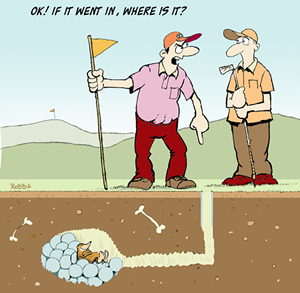
The cartoon above filled the upper half of a full page ad that appeared in the April 1896 issue of The Golfer magazine. (Notice that “Anodyne” was misspelled. The word “anodyne” means anything that relieves distress or pain.) To sell the product the Johnson’s folks included the following eight line poem that appeared below the cartoon: (Spalding also used poetry to sell golf balls. See the Post called “Golf Ball Poetry.”)

When players versed in golfing lore,
Discuss the technique of their score,
And talk of putting, bunker, fore,
Let us suggest to them one more.

“Tis Golfer’s Elbow…and ten to nine,
We can make a cure
That is prompt and sure,—
A Liniment called Johnson’s Anodyne.

Below the poetry was the following statement:

It soothes every ache, every bruise, every cramp, every irritation, every lameness, every swelling everywhere, and speedily relieves and cures every ailment caused by inflammation. It is for INTERNAL as much as EXTERNAL use. It was originated in 1810, by Dr. A. Johnson, an old family physician, for his own practice. It is used and endorsed by athletes everywhere.

So Tiger, now that you have your MRI results, just get a few bottles of Johnson’s Anodyne, rub some on your neck, drink the rest and you should be hitting them long and straight in no time!

(Actually, according to an entry in the American Medical Association Journal (Vol. 101 # 4), Johnson’s Anodyne Liniment contained ” Alcohol (14.8 per cent), a fatty oil, oils of turpentine and camphor, ammonia, ether and water.” And its advertising claims were found to be fraudulent by the Food and Drug Administration in 1932.  So Tiger, maybe forget the advice and good luck with your treatment.)

post

The Prime Minister (to be) is on the First Tee

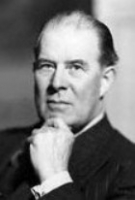
Arthur J. Balfour (1848 – 1930) was a lifetime professional politician and a long time avid amateur golfer, which left him little time for anything else. He was Captain of the North Berwick club, 1891-92 and Captain of the Royal and Ancient Club of St. Andrews a few years later. He was called by some “the father of English golf,” most likely for his strenuous efforts to promote the game. The high point of his 50 year political career was his time as Prime Minister of the U.K. from 1902 – 1905. Earlier as the cartoon indicates, he was Irish Secretary. He was first known as a renowned philosopher, publishing A Defence of Philosophic DoubtThe Foundations of Belief , and Theism and Humanism .

Balfour the golfer (and philosopher) once wrote:

A tolerable day, a tolerable green, a tolerable opponent, supply, or ought to supply, all that any reasonably constituted human being should require in the way of entertainment. With a fine sea-view, and a clear course in front of him, the golfer should find no difficulty in dismissing all worries from his mind, and regarding golf, even , it may be, very indifferent golf, as the true and adequate end of man’s existence.

In 1894 when Captain of the R & A and following its traditions, Balfour drove off the opening ball at the Autumn Golf Meeting with his friend Tom Morris nearby. Balfour commemorated this event with a poem that will appeal to all golfers who harbor first tee trepidations.

A REAL POLITICAL CRISIS

The crisis came, at that wave-beaten place
Men called Saint Andrews in the golfing years;
Tom Morris watched me with an anxious face,
I, full of nervous fears.

Addressed the ball: the crowd had swelled in size:
Behind the ropes I saw; though scarce alive,
The stern tweed-coated men, with golfish eyes,
Waiting to see me drive.

The feat is far less easy than it seems,
Despite the rival politician’s scoff;
Indeed I marvelled what ambitious dreams
Had tempted me to golf.

For I remembered tee-shots toed and topped,
Sad moments, when the driver firmly clutched
Had done its utmost, yet the ball had stopped
Upon the tee, untouched.

This, after all, is merit’s actual test,
I thought, and other laurels matter not,
For no distinguished man can look his best
After a foozled shot.

Still, let me strike, I said, and gathered heart;
Then, with my eye fixed firmly on the ball—
That earliest canon of the Royal Art—
Drove off—and that was all.

post

Early Days of Golf – The “Good Wife’s” Point of View

In the early days, the preponderance of golfers were men. Below are two poems that took the “good wife’s” point of view.

The first poem was published in The American Golfer on April 21, 1923 and “celebrated” the start of golf season. (It had been published earlier in the Chicago Post.)

Dementia Linksensis

The good wife awoke in the night with a start,
She gave a wild shriek with her hand on her heart,
And fright caused her hair to stand on her head,
For their stood her Hub, at the foot of the bed.

He’d wrenched a brass rod from the bed in his trance
And there at the footboard had taken his stance.
The little brass ball at the corner he took
For the pill and was ready to give it a hook.

Quite wildly he swung with his improvised club
And banged his own head like the veriest dub;
But he showed he was an old hand, when he swore
And swung once again with a shrill cry of “Fore!”

Four was right — four light bulbs he’d broke”
When the chandelier stopped his magnificent stroke.
This stopped his endeavor; he crawled back in bed,
And while yet half awake to his wifey he said:

“I know it’s unpleasant and that sort of thing
But I always get this way along in the spring.”

The second poem continues our series “celebrating” the golf widow. This poem, “The G. W.” was written by Miriam Teichner, an American author and journalist, who early in her career wrote a daily column of verse and humor in the Detroit News. The poem appeared in the June 1916 issue of The American Golfer.

THE G. W.

Who sits alone on sunny days
And fills her time in irksome ways?
Whose eyes are dull with sorrow’s glaze?
The G. W.

Who seems to have no place to go?
Whose holidays are filled with woe?
To whom are Sundays all too slow?
The G. W.

Who sighs, what time the days of spring
Their warm and pleasant sunshine bring.
And blossoms white their petals fling?
The G. W.

Who sits alone within the house,
Forlorn as any little mouse?
Who has been cheated of her spouse?
The G. W.

Who is the most neglected soul”
On earth, while husband—selfish mole—
In bogie makes the eighteenth hole?
The golf widow.

Of course, these poems represent historical artifacts of a time gone by. Or do they?

post

Michelle Wie and other Clerihews

E. C. Bentley

Clerihews are four line poems in the form aabb, were the first two lines rhyme as do lines three and four. Furthermore, the first line of a Clerihew begins or ends with a person’s name and the poem focuses on some aspect of his or her life. Of course, there can be variations of this idea. As I explained in an earlier Post, Clerihews are named for their inventor, Edmund Clerihew Bentley (1875 -1956), an English journalist and writer.

As examples, here are a few Clerihews that I wrote:

Harvey Penick

Harvey Penick
(Rhymes with scenic)
His claim to fame:
“Take dead aim.”

Jack Nicklaus

Jack Nicklaus (the Golden Bear)
Pudgy in profile with blondish hair
Left opponents in the dust
With his putting, most robust.

Vardon, Taylor and Braid

Vardon, Taylor and Braid
“The great Triumvirate” so portrayed
In tournaments, to their competitors’ chagrin
One of the three would usually win.

Miclelle Wie

Michelle Wie
May still want to see
If there is a chance
To beat pros who wear pants.

If you are so inclined, try your hand at writing a golf Clerihew and leave it as a comment below.

post

Golf History, Golf Poetry and the Making of the Featherie

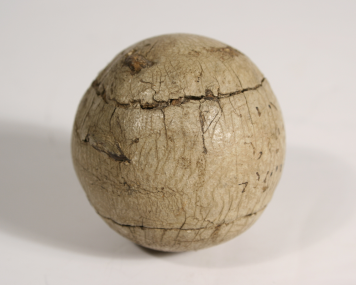
A Featherie Ball

aFor many American golfers, the history of golf begins with the 1913 U.S. Open won in a playoff by Francis Ouimet over Harry Vardon and Ted Ray. The author Mark Frost marks this event as “the birth of Modern Golf” in his bookThe Greatest Game Ever Played. But what about the birth of the game? To get a better idea as to the origins of golf and its early history I would suggest a book called A Swing Through Time — Golf in Scotland 1457-1744 by Olive M Geddes (revised edition published in 2007).  Quoting from the book’s introduction,

This book takes a close look at the earliest written records of golf in Scotland, from the 1457 Act of Parliament banning the game to the first ‘Rules’ of golf — the ‘Articles and Law’ of 1744 drawn up by the Company of Gentlemen Golfers for the competition for the Silver Cup played over Leith Links.

Interestingly, some of these “written records” were recorded in verse. For example, Ms. Geddes devotes a chapter to a discussion of the first book entirely devoted to golf, called The Goff, first published in 1743. It was a mock-heroic epic poem, 358 lines long, written by an Edinburgh lawyer (who later became a Minister) named Thomas Mathison.  A second edition was published in 1763 and a third 30 years later. In 1981 the United States Golf Association published facsimiles of all three editions under one cover in a limited edition of 1400 copies. One of few surviving third edition copes was sold for $80,500 in 1998.

The Goff tells the story of a golf match on the Leith Links played between Castalio and Pygmalion, the heroic combatants of the tale. But the poem also makes reference to some golf related activities of the time. In one interesting section of eight lines, Mathison describes in some detail how featherie golf balls were made:

The work of Bobson; who with matchless art
Shapes the firm hide, connecting ev’ry part,”
Then in a socket sets the well-stitch’d void,
And thro’ the eyelet drives the downy tide;
Crowds urging crowds the forceful brogue impels,
The feathers harden and the Leather swells;
He crams and sweats, yet crams and urges more,
Till scarce the turgid globe contains its store.

Ms. Geddes remarks that “Bobson” probably referred to a St. Andrews ball-maker named Robertson (likely an ancestor of Davie and Allen Robertson). The implication is that although balls were made in Leith at the time, the best balls came from St. Andrews. (Featherie balls dated back to 1618 and were only replaced by Gutta-Percha balls in 1848!) I hope that those of you who might be interested in golf’s early history will have the opportunity to consult A Swing Through Time.

post

Ted Ray’s Golf Swing


The question “What’s wrong with his/her golf swing?”  is often answered today by looking at slow motion video. But the question goes back long before video analysis. It was raised with regard to Ted Ray’s swing shortly after he had participated in the famous 1913 U.S. Open won by Francis Ouimet.

The November 1913 issue of The American Golfer included the following short item titled “Ray’s ‘Sway'”:

Ray comes to us with the reputation of swaying on his up-stroke. Ray does not sway—and we have observed him very closely. What he does is this: Just after the backswing starts the weight is transferred to the right leg; then, about half way up the swing the left shoulder is dropped more or less—a movement in contradistinction to, and offsetting, the first, but to the uninitiated eye, giving every appearance of a sway. The first puts the body weight where it properly belongs—back of the ball—the second enables the arms to complete the upswing. The bending of the knees, more especially the right one, outwardly, creates the false impression of a body sway. It is a sort of leaning in to the ball. Not “according to Hoyle” perhaps, but mighty effective—in Ray’s case.

If you didn’t know, you would have thought that Johnny Miller wrote this! But this was a note in a 1913 golf magazine. And so, not unexpectedly, a short poem was also included:

OH! SAY

Oh! tell us Teddy—Teddy Ray,
Tell us truly, we do pray—
If as some are wont to say,
You do really, really sway.

We ourselves incline that way;
But that is not the proper way,
Our friends inform us day by day
When at the 19th hole we pay.

HIP-HIP-HOO-RAY

Does Ray sway?
Ray does not sway.
He leans; which means
Ray does not sway.

Ray was known for his portly build and prodigious length off the tee, though his ball often landed in awful lies. His recovery powers were said to be phenomenal and cartoonists usually caricatured him with a niblick in hand, festooned with clumps of heather and saplings, with an inseparable pipe clamped between his teeth. During his career he won the 1912 British Open and the 1920 U.S. Open.

post

A Springtime Exchange Between a Golf Poet and his Editor

Robert K. Risk's book, Songs of the Links (1919), includes the following timely exchange between Risk, the golf poet, and and Garden G. Smith (1860-1913) the editor of Golf Illustrated, the British weekly, for many years and an important contributor to the literature of the game. (Risk's poem has been slightly shortened.)

TO THE EDITOR

Bid me write and I will write
Of club and ball and tee,
Trusting the matter I indite
Will be approved by thee.

Bid me to stay my pen and I
Will muzzle it with grace,
Regarding not impatiently
Regretted "lack of space."

But when you hint that I should do
Some verse concerning Spring,
That, I must frankly caution you,
Is quite another thing.

Although not disinclined to sing,
No poet can ignore
That all that can be sung of Spring
Has been well sung before.

Therefore, should I to platitude
And outworn phrase incline,
The brickbats thrown by readers rude
Are yours, dear sir, not mine.

In Spring we walk the daisied links
Where lively lambkins leap—
Too few of them, one sadly thinks,
Will ever grow to sheep.

In Spring a brighter glitter shines
On the well-burnished cleek,
But still we do 5-holes in 9's
Though playing thrice a week.

In Spring the chronic topper dreams
Of getting down to scratch,
Of being picked in all Club teams,
And winning every match.

In Spring we cease to argufy
About the "best-length hole,"
Which simply means the one that I
Enjoy—and you can't hole.

......

'Tis Spring that whets our appetite
For Three weeks' solid golf,
Though ere the third week is in sight
We shall be direly "off."

In Spring the poet is supposed
Keenly his lyre to tune;
But here these verses are foreclosed,
For I am off to Troon.

And here is the editor Garden G. Smith's response:

THE EDITOR

WITH APOLOGIES TO HIS READERS

'Tis bitter sad the poets should
There work neglect for sport,
Wile Mr. Risk plays golf at Troon,
I am two verses short.

May bunkers trap his longest shots,
May rabbit holes annoy him;
And if this here occurs again
I'm blowed if I'll employ him.

post

Golf’s “Don’t Ask, Don’t Tell”

This week’s poem is by an English golfing poet though his name is unknown. It appeared in a book called Mr. Punch on the Links which consists of golf stories, cartoons, and poems from the British magazine “Punch.” The book was published around 1930.  “Punch,” a magazine of humour and satire, ran from 1841 until its closure in 2002.

The poem provides a gentle warning to two kinds of golfers; the first who is only too willing to tell it all after a match and the second who give the first the opportunity.

The Retort Imaginary

SIR, for the information you’ve imparted,
The prompt outspokenness of your reply,
Ranging from that fine drive with which you started
To the long putt by which you won the bye,
With details of the bunkers, whins and banks
Which you surmounted, pray accept my thanks.

I’ve no excuse now, with the facts before me,
For ignorance, no reasonable ground
For doubt as to the hole that saw you dormy,
Or where your victim finally was drowned.
‘Twas kind to give a confidence so free
To a mere casual listener like me.

You’ve told me of the pair in front that beckoned
For you to pass, then found the ball and played
(At the fourth hole) which made you miss your second;
You’ve told me of the stymies you were laid,
And indicated just exactly where
You lifted from the ground under repair.

That chip that got a bad kick at the seventh;
The ninth (the short hole), where you hit the pin;
That run-up shot that won you the eleventh;
The thirteenth where the ball just trickled in—
You’ve made it all quite clear, and it was nice
To know you’ve cured that tendency to slice.

I’m quite convinced you’ve done the best you can, Sir;
Ungrudgingly you’ve given me, I know,
A comprehensive categoric answer
To my brief question of an hour ago;
But it was mere politeness, all the same,
That made me say, “Well, Jones, how goes the game?”

post

More Match Play Poetry

A few weeks ago I wrote a Post about the switch from match to stroke play that occurred about 100 years ago. More recently I came across the following statement by a CBS Sports writer (originally from England) named Ross Devonport.

Match play. Ahhh…the purest form of golf. There’s nothing better than watching to guys going head-to-head over 18 or 36 holes, taking risks instead of being worried about not making the cut and playing conservatively.

I actually think Devonport got it wrong. Watching the Accenture on TV last week was, by the last round, reduced to watching a few shots squeezed in between advertisements. What’s better would be to engage in a friendly game of match play from time to time and leave the score cards with the starter. But when was the last time someone came up to you at your local course and asked “do you want a match?”  Maybe in Scotland, but not in the U.S. Or am I wrong?

Matches of all kinds were certainly played at the Old Course in St. Andrews in the 1920’s. And for some undetermined reason, The Royal and Ancient Golf Club recommended at that time with regard to such matches that “all sympathetic handicapping should be discontinued.” This advisory inspired a wily golf poet to respond with the following tale:

Out of Sympathy

Neuritis was Jones’s trouble, plus a cold and a hacking cough,
When he found his way to the links one day and fancied a round of golf;
I was practising on the putting-green, failing to get them down,
When he hoarsely crooked, “Do you want a match?”—and the stakes were half-a-crown.

“Of course,,” said Jones, “as I’m far from fit I shan’t give you a game;
Unless I receive some extra strokes I’m afraid you’ll find it tame;
I don’t suppose I shall hit a ball (he choked); you’re sure to win”
So I gave him a half instead of a third, with a couple of bisques thrown in.

Taking the honor I promptly sliced into a clump of gorse,
While poor old Jones with terrible groans drove a peach straight down the course;
I got well out and snatched a five (which might have been much more);
He topped his second and fluffed his third, then holed his approach for a four.

I reached the green from the second tee and murmured, “Good Enough!”
Jones pushed his off (he had to cough!) to the right and was lucked in the rough;
His approach pulled up on the edge of the green, but his putt, though a trifle brisk,
Dropped in, and he said, when my second lay dead, “My hole! I shall take a bisque.”

From there to the turn, whatever I did, the bunkers took their tolls,
While Jones, though suffering awful pain, continued to take the holes;
He was “dormie nine,” and he won the tenth by laying a chip-shot dead;
“The match!” he moaned with a sickly smile and “Double or quits,” I said.

The rest of the tale is steeped in gloom too deep to describe in rhyme;
He won the bye and the bye-bye too—we’d double or quits each time;
With a look resigned and a permanent where he took the well-known road
To the “nineteenth hole,” four half-crowns “up” and—SYMPATHY BE BLOWED!

The poem originally came from the magazine Punch, and appeared in The American Golfer on May 7, 1921. The term “bisque” is a handicap stroke in match play that can be taken at any hole nominated by the player who receives it. And “the bye” refers to a hole or holes remaining if the match is won before the 18th hole.

post

A Poetic Response to the Rise of Medal Play in 1912

Controversies in golf are usually associated with change in the rules, equipment or form of play. Currently, the groove rule change is front and center. In early times, controversies arose when the switch began from the feathery to the gutta percha ball in 1848 and with the switch from hickory to steel shafts in the 1920’s. The R & A banned the Schenectady putter in 1911. This was the putter that Walter Travis used to become the first American to win the British Amateur Championship in 1904.

Golf controversies today are reported by the traditional media, newspapers and magazines, but also by the traditional media’s dot.com outlets and by the social media, blogs and tweets. The impact of Internet golf reporting has shifted the focus to reporting stories bit by bit in real time with immediate commentary by “followers.” The opportunities to place a hot story in its historical context and search for humorous and ironical dimensions are few. Twitter has trumped poetry as the means for story telling.

But, of course, this has not always been true. For example, in the early 20th century most amateur golf in Great Britain was played under the rules of match play. But the introduction of the score card and pencil stub made medal or stroke play scores easy to record. And by 1912 medal play was on the rise. Robert K. Risk, a Scottish poet and writer and a golf traditionalist, believed that match play defined golf and that this shift harmed the character of the game.

In voicing his opposition to the increase in medal play he was not limited to a time deadline or to 140 characters. Instead, he took his time and fashioned a poem of depth and imagination and biting wit. His poetical protest did not stem the tide of medal play, but does survive as an interesting contrast to how golf controversies are aired today.

“Medalitis,” Risk’s poem, was originally published in the English humor magazine Punch on October 2, 1912. Please be patient as you read it. If you have time, a second reading will help to fully enjoy Risk’s work.

Medalitis

In the full height and glory of the year,
When husbandmen are housing golden sheaves,
Before the jealous frost has come to shear
From the bright woodland its reluctant leaves,
I pass within a gateway, where the trees,
Tall, stately, multi-coloured, manifold,
Draw the eye on as to some Chersonese,
Spanning the pathway with their arch of gold.

A river sings and loiters through the grass,
Girdling a pleasance scythed and trimly shorn;
And here I watch men vanish and repass
To the last hour of eve from early morn;
Dryads peer out at them, and goat-foot Pan
Plays on his pipe to their unheeding ears;
They pass, like pilgrims in a caravan,
Towards some Mecca in the far-off years.

Blind to the woodland’s autumn livery,
Blind to the emerald pathway that they tread,
Deaf to the river’s low-pitched lullaby,
Their limbs are quick and yet their souls are dead;
Nothing to them the song of any bird,
For them in vain were horns of Elfland wound,
Blind, deaf and stockfish-mute; for,in a word,
They are engaged upon a Medal Round.

Making an anxious torment of a game
Whose humours now intrigue them not at all,
They chase the flying wraith of printed fame,
With card and pencil arithmetical;
With features pinched into a painful frown
Looming misfortunes they anticipate,
Or, as the fatal record is set down,
Brood darkly on a detrimental 8.

These are in thrall to Satan, who devised
Pencil and card to tempt weak men to sin,
Whereby their prowess might be advertised —
Say, 37 Out and 40 In;
Rarely does any victim break his chains
And from his nape the lethal burden doff —
The man with medal virus in his veins
Seldom outlives it and gets back to Golf.