post

Golf Ball Poetry

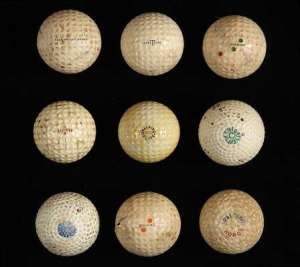
Spalding Balls from PBA Galleries Auction

Spalding Balls from a PBA Galleries Auction

If you think that selecting a golf ball is complicated in today’s market with multiple brands each with several balls, then consider what one company, A. G. Spalding & Bros., was offering in 1914. A Spalding advertisement in the September 1914 issue of Golf magazine (from the USGA’s Seagle library) offered readers “Large size balls,” either “light weight” or “heavy weight;” “Medium size balls,” again light or heavy weight; or “Small size balls,” this time “medium weight” or heavy. Each ball was designed for a particular group of players. For example, the small heavy ball was for “extreme distance…and for long players particularly,” the medium light ball was for “ladies and light hitters…,” while the large light ball was for “moderate hitters….” [Read more…]
post

Tiger and Jack in a Clerihew

Murder on the 8th Hole

Murder on the 8th Hole

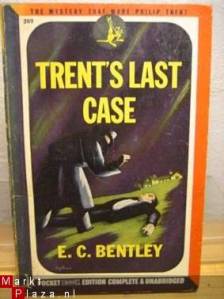
E. C. Bentley (1875-1956), the English journalist and writer, was famous in the first half of the 20th century for his Philip Trent mystery stories. One of his short stories, The Sweet Shot, was selected for inclusion in Golf’s Best Short Stories edited by Paul D. Staudohar and published in 1997. But Bentley, whose full name was Edmund Clerihew Bentley, should be better known for inventing a particular type of poem that has become known as the “Clerihew.” Clerihews are four line verses of the form aabb, in other words, the first and second lines rhyme as do the third and fourth. Beyond their rhyming scheme, Clerihews have a particular structure and purpose. Each focuses on one or more aspects of  the life and/or the works of a famous person while allowing for, better yet encouraging, overstatement, distortion and humor. It is also a requirement that the first line of a Clerihew begin or end with the person’s name. When Bentley was 16 he wrote his first Clerihew.

Sir Humphry Davy
Detested gravy.
He lived in the odium
Of having discovered Sodium

Bentley, in later years, wrote at least two golf Clerihews. [Read more…]

post

“When Travis Played the President”


President Taft

President Taft

As we welcome a new golfer-President, it should be remembered that William Howard Taft, our first true golfing President, became the 27th leader of our country March 4, 1909, one hundred years ago. Taft began playing golf in 1896 and was the first President of the Cincinnati Golf Club before going to Washington. While President of the United States, Taft often played golf with Walter J. Travis, founder of the magazine “The American Golfer” and for many years a very fine amateur golfer.

This is how Travis, in the June 1909 issue of his magazine, described the play of Taft,

“If the President will pardon me, I do not really think he would have much chance of qualifying in one of our amateur championships, but for all that he plays a very sound game, one free from bad faults of any kind … far better than the average ‘duffer,’ both in style and results.”

Travis goes on to write that, “Taft, in his modesty, some little time ago described his game as being of the bumble-puppy order.” Travis disagreed saying that the President “has nothing to ‘unlearn’ or correct and needs only some steady practice to develop a strong game.” Don’t we all!

Travis and Taft were sometimes partners in four-ball and best-ball matches. Apparently they played matches against each other as well. In fact, they were immortalized as being opponents in a poem called “A New Ballad of Chevy Chase,” by a poet who signed with only his initials “J McC T.” The poem also appeared in the June 1909 issue of “The American Golfer.” [Read more…]

post

Tiger Woods’ Masters Chip for the Ages

The PGA.com headline read “The Chip Heard ‘Round the World.’” The shot, of course, was Tiger Woods’ chip from behind the sixteenth green on the final day of the 2005 Masters. Art Spander, an Oakland Tribune’s golf writer, started his article: [Read more…]