post

An Irish Golf Poem: “Groans of an Irish Caddie”

I started my research on the historic links between golf and poetry around 2008. At the same time I started composing golf poems. I turned my research efforts into a book, Golf Course of Rhymes, that was published in 2011. The book includes poems by golfers from Scotland, England, Canada and the United States. This blog also includes a poem by an Australian. However, up to now I’ve never discovered a golf poem by an Irish poet. So, as we prepare for this year’s Open Championship at Royal Portrush Golf Club in County Antrim, Northern Ireland, I am happy to finally offer an Irish Golf Poem, “Groans of an Irish Caddie” by Mr. W. F. Collier, LL. D. (1831-1904). According to Google AI, “Collier was born in Dublin and attended Trinity College there, earning both a B.A. and an LL.D. While he worked at a school in Glasgow, he spent thirty years as the English master at the Belfast Royal Academy.” Here is his poem:

Groans of an Irish Caddie

Oh! Paddy dear, an’ did ye hear
The news that’s in the pubs?
Them golfers is removin’
All the shamrocks wid their clubs.
The puttin’ grass so nately swep.
Is nowheres to be seen,
For the mischiefs in that mashie-club
That’s rippin’ up the green.
I met wid Arty Balfour,
An’ he tuk me by the hand,
An’ sez he—“I’ve sliced the soil mysel’,
So, shure, I onderstand.”
It’s the most uprippit coun-thery
That I’ve ever seen:
From Dollymount to swate Portrush
They’re wearin’ out the green.
Oh! Some in coats o’ cruel red,
An’ some in tartan knicks,
An’ some wid ties o’ chancy blue,
Bud all o’ them wid sticks.
An’ they batthers at a weenie ball
That’s lyin’ in the sod,
An’ hits it—no! they hammers it,
An’ digs out pounds o’ clod.

If the ball wint wid the surface thin
Them two’d complate the scene—
But no! it’s sleepin’ where it lay,
Like a mushroom, white an’ clean.
It’s the most uprooted coun-thery
That iver yit was seen:
From Aughnacloy to Kinnegar
They’re slicin’ off the green.
They comes wid drivers, cleeks, an’ spoons,
An’ clubs o’ quarest name,
An’ they calls a hape o’ sand their tay,
But it’s whishky that they mane.
An’ they calls the sods they’re flittherin’ out
Big “divots” as they fly,
For they can’t spake dacent English,
Like yersilf, Paudeen, an’ I.
Oh! who’s to save poor Oireland
Whin they’ve sthript our Immirald Queen,
An’ nothin’s left bud bogs an’ rocks
Contagious to be seen
In the most un-grass-ful coun-thery
That iver yit has been—
Augh! divil take that mashie-stick,
For it’s KILLIN’ out the green.

If you are an Irish golfer or have golfed in Ireland, you can probably understand the “groans” pretty well. For the rest of us, there are some difficulties. I’ll try to help a little. Arty Balfour is Arthur Balfour who was British statesman and Conservative politician who served as the Prime Minister of the United Kingdom from 1902 to 1905. He was also an avid golfer. The line, “From Dollymount to swate Portrush,” can be understood as, halfway across Ireland from great golf courses on the east coast all the way north to Portrush and other great golf courses. Finally, the name “Paudeen” probably comes from W.B. Yeats’ poem of the same name. The name is used to represent an ordinary, perhaps unremarkable Irishman.

Comments are always welcome.


post

A New Substack Post – The Golf Widow in Verse

I’m using my Substack site to publish longer pieces about the poetry of golf. “The Golf Widow in Verse” is my second post. My poetry and shorter golf poetry pieces will continue to appear on this blog. Also note that the blog already contains more than 260 entries. If you have time, I hope you will find some interesting poetry among them.

Here is the link: https://golfpoet.substack.com/p/the-golf-widow-in-verse?r=zljx

post

Substack Site

I’ve decided to create a Substack Site for longer articles. I just published my first one which you can read at https://golfpoet.substack.com/p/links-between-golf-and-poetry-from. Here is a summary of of what I wrote:

“Links Between Golf and Poetry from the Earliest Days” delves into the rich history of golf and its poetic connections, providing many examples. It begins with a charming anecdote from 1894, where Arthur Conan Doyle, the creator of Sherlock Holmes, gave golf lessons to Rudyard Kipling. Doyle, a lifelong golfer, expressed his love for the game in a poem titled “A Lay of the Links.”

The earliest known golf poem dates back to 1687, written by Thomas Kincaid, an Edinburgh medical student. The first book of golf poetry, The Goff, was published in 1743. The rise of golf clubs in Scotland in the 18th century led to a flourishing of golf poetry, with many early golf writings being in verse form. George Fullerton Carnegie, known as “The Golfer’s Poet,” published Golfiana in 1833, a significant collection of golf poems.

David Jackson, another notable golf poet, published Golf – Songs and Recitations in 1886, expressing his love for the game through poetry. The article also mentions the role of golf magazines in promoting golf poetry, with publications like Golf Illustrated and The American Golfer featuring poems extensively.

The article contains poems from the humorous to serious, with poems addressing topic including the frustrations of the game, the notion of the “golf widow,” and even political and social issues. Notably, Sarah N. Cleghorn used golf imagery to protest child labor in her poem “Through the Needle’s Eye.”

Overall, the article illustrates how golf and poetry have been intertwined for centuries, with writers using aspects of the game as the starting points for their poems. This historical connection identifies a unique and enriching dimension to the literature of golf.

post

Hands Up

This year’s Masters deserves a commemorative poem. Here is my offering:

Hands Up

Sunday at the Masters
With Rory up two
Would he finally slam it
Or again not come through.

His followers were many
With the same unease
When he doubled the first
A plaintive “please.”

Then at the second
He fell back by one
The crowd behind him
Was not having fun.

They had come to cheer
To rise with hands up
Instead, they were asking
Will he ever lift the cup?

The betters had made
DeChambeau the villain
But after thirteen
Rose was the fill-in.

Rose rose from way back
To now one behind
An unexplainable water ball
Put Rory in a bind.

From fourteen on
A two man show
With Rory one up
With one more to go.

But the hoped for ending
Would have to wait
Rory’s putt slid past
There’d be no checkmate.

The patrons’ anxiety
Was peaking for sure
An unwanted playoff
They’d have to endure.

On eighteen again
Rose gave it his best
But Rory one better
Ended the test.

He fell to the ground
Finally, no grief
The slam was completed
His feeling, “relief.”

Fans ‘round the world
Shared in his glory
An exclusive club joined
One hell of a story.

Leon S White, PhD

Author of:
If Golf Balls Could Talk – Collected Golf Poems
Golf Course of Rhymes – Links between Golf and Poetry Through the Ages

Both available at Amazon.

post

A Story About the Open Championship of 1913


suffragettes


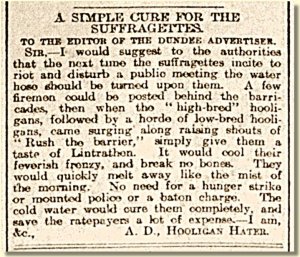
Frustration is a feeling that is familiar to all golfers. The following is a story of political frustration that spilled over to golf.

In England, starting in 1866, a women’s movement known as the suffragists began working for the vote. In 1903, a violent offshoot of this movement, called the “suffragettes,” instituted militant means to force the issue. One of their tactics was to destroy the turf at golf courses. It was reported in the May 1913 issue of The American Golfer “that if they could manage it, the ‘wild women,’ as they are being called, meant to do some considerable harm to the [Royal Liverpool Club] and interfere as far as they could with the success of what is expected to be the biggest championship meeting that has ever taken place.”

The article goes on to say that “in the emergency the club called on the villagers to assist them in the protection of the course… These efforts were successful and the 1913 Open Championship went off without any problems.”

An unknown poet provided an eight line remedy for this golf course terrorism in the April 1913 issue of The American Golfer.

               The Remedy

When Suffragettes deface our greens
By various unlawful means,
What shall we golfers do to these
Intolerable Divottees?

Clear is the answer in our rules,
Plain to be read by even fools:
“Replace the turf!” and why not let
It be above the Suffragette?

Sometimes you just can’t do better than a poem to make a point.

post

Oakmont, W.C. Townes and a Missing Poem “Found”

getimage-idx

W.C. Fownes

The Oakmont Country Club, site of this year’s United States Open, has a long and colorful history. It was designed and built in 1903 by a Pittsburgh industrialist, Henry Clay Fownes. But Fownes, apparently anticipating longer balls and better clubs, laid out an extremely difficult, bunker-laden course. Henry, known as “H.C.” and his son William Clark Fownes, Jr., named for his uncle and known as “W.C.”, who together managed the course,were determined to make even the best golfers work hard to make pars, let alone birdies.

Two tales, one apocryphal and the other true, illustrate the role the W.C. played in keeping Oakmont on the edge. The two stories also mark two different time periods, the first in 1915 when poetry was often used to poke fun at something or somebody; the second in 1945, when a poetic opportunity was missed for lack of a verse writer.

The first story was told in verse at first banquet hosted by members of the Midiron Club on February 2, 1915 at the Hotel Schenley in Pittsburgh. The club itself consisted of 25 members, officials from local clubs including both H.C. and W.C. The banquet brought together “four hundred of the country’s most noted golfers and sportsmen, many of who had journeyed from far distant points to be present at the festal board.” The quote is from an article in the February 1915 issue of Golf Illustrated and Outdoor America.  The article goes on to describe a raucous evening of entertainment by the members, including the following song to the tune of “The Battle Hymn of the Republic” which included these final seven line,

We may be short on science
  As we stand upon the tee,
And dig a thousand divots
  As we wander o’er the lea,’’
But when it comes to singing
  We’ve got bogey up a tree,
As the Midiron marches on.

After the song, some members of the club put on a skit. (Not ever being a member of a private club, I cannot comment on current practice.) The setting was “The Tom Morris Golf School.” The skit took the form of a question and answer session in which one of the members, W. H. Duff, a prominent Pittsburgh lawyer, played the role of the teacher. The script begins with the first of the two stories I referenced above, the one told in verse,

“Teacher: Willie Costin (another member), have you any criticism to make of the Oakmont Country Club?

Pupil: You bet I have and it is in poetry. Here it is:

Bill Fownes stood by a green one day,
When someone holed in four;
“I’ll put a stop to that,” said he,
“I’ll build two bunkers more.”
And sure enough he build them both,
Where they could sure be seen;
The first one right before the tee,
The other on the green.”

So W.C.’s reputation as a bunker builder was well established in the Club’s early years.

Fast forward to 1945 when Oakmont hosted a World War II Bond exhibition match. In a practice round, Sam Snead, one of the star attractions, discovered an alternate route to No. 7 and hit his tee shot to the right. He ended up making a birdie. The next day, satisfied with his ploy, he hit the same drive again and much to his surprise found his ball in a brand-new bunker. He made a bogey. It turned out that the superintendent had called W.C. and W.C. had ordered a new bunker to be built before daybreak. A great story, just waiting for a poet’s touch.

It’s now 71 years later, but I can’t resist a try at filling in that blank.

W.C.’s Revenge

In ‘45
At an Oakmont match,
The Slammer saw the light;
At the 7th a bird,
Routine shots deferred,
Instead a drive to the right.

The next day Snead
Again aimed right
And hit his drive but then;
The exact same shot
In a sand trap caught,
W.C. had struck again.

post

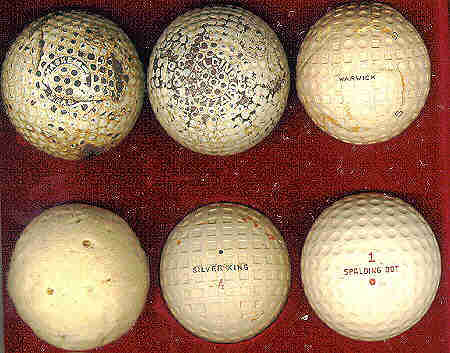
If Golf Balls Could Talk

6oldBalls_

I woke up this morning before the alarm rang and pretty quickly arranged the following four lines in my mind:

If golf balls could talk
What would they say?
That might depend on
Who put them in play.

So I quietly got up, left my still sleeping wife and headed for my study. In the next hour or so I pretty much completed the poem below. Now I can get my mind back on track and read today’s New York Times.

IF GOLF BALLS COULD TALK

If golf balls could talk
What would they say?
That might depend on
Who put them in play.

Jordan’s ball
Might explicate
On why all the pleading
When it’s too late.

Nicklaus’s ball
Might just tweet
‘Bout the good old days
When it couldn’t be beat.

Michelle’s ball
Might take a chance
And comment on
Her putting stance.

Tiger’s ball
Might make no sound
It’s bored after all
From sitting around.

Michelson’s ball
Might try to lay claim
To Lefty’s success
In his brilliant short game.

Tom Watson’s ball
Might talk a ton
‘Bout the five British Opens
The Champion Golfer won.

And,

Bubba’s ball
Might just complain
That it never goes straight
And is always in pain.

So,

What about your ball,
What about mine?
They might just keep silent
And that would be fine.

Leon S White, PhD

audio

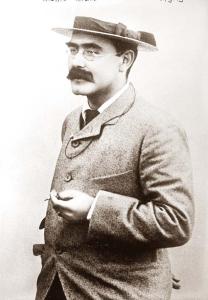
Rudyard Kipling

Rudyard Kipling

The holiday on November 11th, originally called Armistice Day,commemorated the end of World War I. Now in the U.S., the holiday is called Veteran’s Day and more broadly honors all war veterans. In other Posts I have included First World War related golf poetry. In this entry I include one by Rudyard Kipling from my book Golf Course of Rhymes – Links between Golf and Poetry Through the Ages.

Rudyard Kipling, the famous English author and poet born in Bombay, India in 1865, was also a golfer. He wrote many famous poems including “Mandalay” and “If . . .” In the following dramatic First World War poem, “Mine Sweepers,” he includes a reference to golf. The “Foreland” in the poem probably refers to headlands between Dover and Margate on the southeastern coast of England, overlooking the English Channel.

The Mine-Sweepers

Dawn off the Foreland—the young flood making
Jumbled and short and steep—
Black in the hollows and bright where it’s breaking—
Awkward water to sweep.
“Mines reported in the fairway,
“Warn all traffic and detain.
“Sent up Unity, Claribel, Assyrian, Stormcock, and Golden Gain.”

Noon off the Foreland—the first ebb making
Lumpy and strong in the bight.
Boom after boom, and the golf-hut shaking
And the jackdaws wild with fright.
“Mines located in the fairway,
“Boats now working up the chain,
“SweepersUnity, Claribel, Assyrian, Stormcock, and Golden Gain.”


Dusk off the Foreland—the last light going
And the traffic crowding through,
And five damned trawlers with their syreens blowing
Heading the whole review!
“Sweep completed in the fairway,
“No more mines remain.
“Sent back Unity, Claribel, Assyrian, Stormcock, and Golden Gain.”

(According to Alastair Wilson, a Kipling expert, the “golf-hut” in the second stanza might have been the club-house at Royal St. George’s Club at Sandwich, in East Kent.)

If you would like to listen to a dramatic reading of this poem, click on the following link:  https://www.youtube.com/watch?v=b4Ahz5ykIEM

post

Duffers Yet

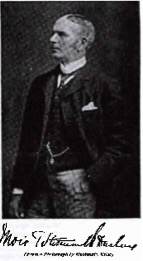
Lord Darling

From Wikipedia:

“Moir Tod Stormonth Darling (Lord Stormonth Darling, 3 November 1844 – 2 June 1912) was a Scottish politician and judge. He was Member of Parliament for Edinburgh and St Andrews Universities from 1888 to 1890 and served as Solicitor General for Scotland during the same period.
From 1890 to 1908 he was a Lord of Session. In 1897 he was President of the Edinburgh Sir Walter Scott Club and gave the Toast to Sir Walter at the club’s annual dinner.
In 1900 he featured in a set of Copes cigarette cards of well known golfers. The card, numbered 49, depicts him standing in a bunker and is entitled “Duffers Yet”.”

If you are a collector of golf poetry, you soon discover that the title of the Lord’s cigarette card is, in fact, the title of a poem he wrote:

              Duffers Yet

By Lord Stormonth Darling|
(With apologies to the Author of Strangers Yet.)

After years of play together,
After fair and stormy weather,
After rounds of every Green,
From Westward Ho! To Aberdeen:
Why did e’er we buy a Set—
If we must be Duffers yet?
Duffers yet! Duffers yet!

After singles, foursomes, all
Fractured club and cloven ball,
After grief in sand and whin,
Foozled drives and putts not in,
Even our caddies scarce regret
When we part as Duffers yet.
Duffers yet! Duffers yet!

After days of frugal fare,
Still we spend our force in air:
After nips to give us nerve,
Not the less our drivers swerve:
Friends may back, and foes may bet,
And ourselves be Duffers yet.
Duffers yet! Duffers yet!

Must it ever then be thus?
Failure most mysterious!
Shall we never fairly stand
Eye on ball or club in hand?
Are the Fates eternal set
To retain us Duffers yet?
Duffers yet! Duffers yet! *

*This first appeared, without the third verse, in Edinburgh Courant in 1869, and was respectfully dedicated to the Honourable Company of Edinburgh Golfers.

(The poem is taken from a book, Stories of Golf by William Knight and T.T. Oliphant published in 1894.)

As the note says, the poem was published in 1869. Yet the sentiments expressed, particularly in the last stanza, are ours as well – at least on occasion. The game has surely changed since 1869, but the emotions remain the same. Amazing!

post

Opposites at St. Andrews

St. Andrews

Continuing on the theme of opposites in golf (see the previous Post and others in the Blog), this poem considers some opposites at the Old Course.

OPPOSITES AT ST. ANDREWS

Beware when playing the Old Course
It’s not like a home course round
The differences are many
Opposites abound.

For example, at St. Andrews
You’ll have to walk all parts
No riding at the Old Course
It doesn’t offer carts.

On a typical day at St. Andrews
You are sure to feel the breeze
But look in all directions
You won’t see any trees.

Humps and bumps all over
It’s not like a walk in a park
More than a hundred bunkers
Take heed if you’re out after dark.

They started with eleven fairways
But twenty-two holes to play
The walk was out to eleven
Then in the opposite way.

But twenty-two were too many
So they came up with a plan
To reduce the number to eighteen
And modern golf began.

Leon S White, PhD