post

The Golfpoet’s Take on Tiger

This Post marks the beginning of the second year of Golf Course of Rhymes. I would like to thank all of my fellow bloggers who have made their readers aware of this site. And most of all I would like to thank all of my readers who have logged more than 17,000 page views in the first year. And who said, “Golf poetry?”

To begin year two, I offer a poetic parody on the golf story of the year. The original, “Casey at the Bat,” can be found at the Poetry Foundation site.

Tiger on the Mat
(With thanks and
apologies to Ernest
Lawrence Thayer)

The outlook isn’t brilliant for the Pro Golf Tour this year;
At least at the beginning, there’ll be one less pro to cheer.
No his name it isn’t Casey, but he’s known to be a swinger,
And his story much like Casey’s must be classed as one humdinger!

[Skipping the 10 stanzas that tell Tiger’s sad story which you already
know (or think you know), we move to the last eight lines.]

The smile is gone from Tiger’s face, his teeth banged up from hate,
Was he pounded with cruel violence, a club upon his plate?
And now his sponsors keep their cash as he has dropped the ball,
And now the golf world’s shattered by the length of Tiger’s fall.

Oh, somewhere on a golf course, the sun is shinning bright;
A foursome’s playing somewhere, and somewhere hearts are light,
And somewhere dubs are laughing, and somewhere “fore” is shouted;
But there is no joy in Vedra-ville – mighty Tiger has been outed.

by the Golfpoet (Leon S. White)

post

At the Docks to Send Off Ouimet in 1914

Ouimet's ship to England

Ouimet’s ship to England

Suppose you lived in Orlando and wanted send Tiger off to the 2009 President’s Cup matches. Chances are you would not have known where to go or when. Things were different 95 years ago.

If you lived in Boston and the date was March 29, 1914, then in the late afternoon you might have decided to go down to the harbor where the steamship Lapland was docked. You’d have gone there to wave goodbye to Francis Ouimet, the current U.S. Open champion, who was off to England for the Amateur and Open championships. At the dock you would have been “surrounded by a hundred and more golfers who risked the loss of a good Sunday dinner in order to be on hand and give a rousing cheer when the ocean liner started on its way across the deep.”

The quote is from an article in the May 1914 issue of Golf Illustrated. Also included is a song about Ouimet written by “the golf poet-laureate of Boston, Joseph A. Campbell…” that a few of his friends might have sang on board ship before it sailed.

Oh! He wasn’t known in Europe till last Fall,
But they know him now in far off Hindustan,
In Bombay, in Baroda, in Bengal
He’s known to ev’ry blooming Englishman.

He had read about this Vardon and of Ray,
But they didn’t seem to feaze the lad at all,
He just simply kept on playing,
Did not mind what folks were saying,
And proved himself the topper of them all.

Chorus:

Oh! Francis, Francis Ouimet,
You’re a golfer through and through,
You rose to the occasion
When our last hope was in you;
May your good luck never fail you,
May your shots be always true,
God bless you, Francis Ouimet,
All our caps we doff to you.

Oh! He’s always on the job when Duty calls,
He’s the golfing pride and glory of the Hub,
He’s modest and his modesty enthralls,
And a deadly shot he is whate’er the club.

He knows we like to hear the Lion roar,
And to see the knots a’tying in his tail
And Johnny Bull he’ll show once more
What he showed him once before,
That the golfer who is best must prevail!

Ouimet along with his sailing partner Arthur G. Lockwood, 1903,1905 and 1906 Massachusetts State Amateur Champion, landed in Dover, England on April 6th. Unfortunately, both golfers faired poorly at both the British Amateur and Open. Ouimet would later write in his book, A Game of Golf, first published in 1932, “My trip to England was a horrible failure from the competitive point of view…” (p. 62)

So neither the golf trip nor the song turned out to be memorable. But had you been at the dock, you would have had a good story to tell.

(Note: After Francis Ouimet returned to the U.S. , he did win the 1914 Amateur Championship, becoming the first career winner of both the U.S. Open and Amateur Championships.)

post

Golf Ball Poetry

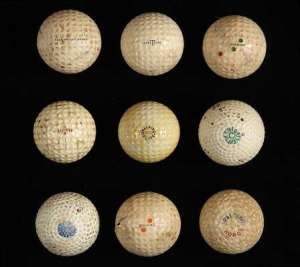
Spalding Balls from PBA Galleries Auction

Spalding Balls from a PBA Galleries Auction

If you think that selecting a golf ball is complicated in today’s market with multiple brands each with several balls, then consider what one company, A. G. Spalding & Bros., was offering in 1914. A Spalding advertisement in the September 1914 issue of Golf magazine (from the USGA’s Seagle library) offered readers “Large size balls,” either “light weight” or “heavy weight;” “Medium size balls,” again light or heavy weight; or “Small size balls,” this time “medium weight” or heavy. Each ball was designed for a particular group of players. For example, the small heavy ball was for “extreme distance…and for long players particularly,” the medium light ball was for “ladies and light hitters…,” while the large light ball was for “moderate hitters….” [Read more…]

post

Tiger and Jack in a Clerihew

Murder on the 8th Hole

Murder on the 8th Hole

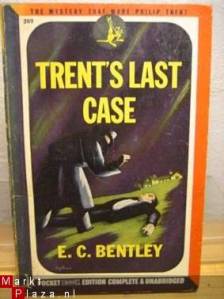
E. C. Bentley (1875-1956), the English journalist and writer, was famous in the first half of the 20th century for his Philip Trent mystery stories. One of his short stories, The Sweet Shot, was selected for inclusion in Golf’s Best Short Stories edited by Paul D. Staudohar and published in 1997. But Bentley, whose full name was Edmund Clerihew Bentley, should be better known for inventing a particular type of poem that has become known as the “Clerihew.” Clerihews are four line verses of the form aabb, in other words, the first and second lines rhyme as do the third and fourth. Beyond their rhyming scheme, Clerihews have a particular structure and purpose. Each focuses on one or more aspects of  the life and/or the works of a famous person while allowing for, better yet encouraging, overstatement, distortion and humor. It is also a requirement that the first line of a Clerihew begin or end with the person’s name. When Bentley was 16 he wrote his first Clerihew.

Sir Humphry Davy
Detested gravy.
He lived in the odium
Of having discovered Sodium

Bentley, in later years, wrote at least two golf Clerihews. [Read more…]

post

“When Travis Played the President”


President Taft

President Taft

As we welcome a new golfer-President, it should be remembered that William Howard Taft, our first true golfing President, became the 27th leader of our country March 4, 1909, one hundred years ago. Taft began playing golf in 1896 and was the first President of the Cincinnati Golf Club before going to Washington. While President of the United States, Taft often played golf with Walter J. Travis, founder of the magazine “The American Golfer” and for many years a very fine amateur golfer.

This is how Travis, in the June 1909 issue of his magazine, described the play of Taft,

“If the President will pardon me, I do not really think he would have much chance of qualifying in one of our amateur championships, but for all that he plays a very sound game, one free from bad faults of any kind … far better than the average ‘duffer,’ both in style and results.”

Travis goes on to write that, “Taft, in his modesty, some little time ago described his game as being of the bumble-puppy order.” Travis disagreed saying that the President “has nothing to ‘unlearn’ or correct and needs only some steady practice to develop a strong game.” Don’t we all!

Travis and Taft were sometimes partners in four-ball and best-ball matches. Apparently they played matches against each other as well. In fact, they were immortalized as being opponents in a poem called “A New Ballad of Chevy Chase,” by a poet who signed with only his initials “J McC T.” The poem also appeared in the June 1909 issue of “The American Golfer.” [Read more…]

post

Tiger Woods’ Masters Chip for the Ages

The PGA.com headline read “The Chip Heard ‘Round the World.’” The shot, of course, was Tiger Woods’ chip from behind the sixteenth green on the final day of the 2005 Masters. Art Spander, an Oakland Tribune’s golf writer, started his article: [Read more…]