post

Indoor Golf in Chicago Now and Then

From the current issue of “GolfTime Magazine,” a biannual guide to golf in the Chicago area:

Experience Chicago’s Most Accurate and Realistic Indoor Golf Facility!

Experience a new paradigm in year-round indoor golf facilities at Play 18 in downtown Chicago’s Loop.  Located at 17 N. Wabash, just a few blocks from Millennium Park, Play 18 aims to offer golf enthusiasts full game play and practice facilities with sophisticated golf technologies, amenities, membership packages and more – all 12 months of the year, rain or shine!

We all know that golf has a long history. But the folks at Play 18 may not know that indoor golf was played in Chicago and nearby more than 100 years ago.  According to Robert Pruter, a major golf instructional school, O’Neil & Fovargue Indoor Golf School (185 Wabash Ave), opened in 1910.  (Whether 185 was North or South Wabash, if the Indoor Golf School existed today it would be a very short walk from there to Play 18!)

But a student of golf poetry would have found reference to the Indoor Golf School, not in Mr. Pruter’s article, but in a poem called “Winter Golf” by Bert Leston Taylor (1866-1921), the great Chicago Tribune columnist.

WINTER GOLF

“All the benefits of outdoors winter golf
in the tropics, at the Indoor Golf School” – AD

Within the grimy Loop’s environs,
The rubber pill may be addressed,
A man may swing his golfing irons,
And let his fancy do the rest.

The murmur in the street below,
The elevated’s boom and roar,
Will sound–if fancy have it so–
Like surf upon a tropic shore.

The air within the driving stall
Does not suggest a Stilton cheese,
To one whose mind is on the ball
‘Tis fragrant as a tropic breeze.

We, upon whom the spell is laid,
For tropic things care not a whoop,
Imagination’s artful aid
Will bring the tropics to the Loop.

The sun, the breeze, the fields, the rest–
Of them let railway folders sing.
We know, who are by golf obsessed,
The Pill’s the thing! the Pill’s the thing.

With its continued relevance, Taylor’s poem may deserve a spot on the wall at Play 18.

post

Short Golf Poems – Less Than a Foot

Two line golf poems, such as the Twines I occasionally write for Twitter, are short. But what about really short golf poems?

The widely acknowledged shortest general poem is:

FLEAS

Adam
Had ’em.

I would offer as a possible shortest golf poem:

BACKSWING

Low
Slow.

A three word entry might be:

DUFFER’S GOLF

A profane
Game!

And in the four word category, a familiar refrain uttered by many after a series of bad shots:

A GOLFER’S LAMENT

Can’t hit
For sh–.

If you would like to share your two, three or four word golf poems, please leave a reply. It shouldn’t take long.

[And if you are looking for a unique gift, please consider my book, Golf Course of Rhymes – Links between Golf and Poetry.” Robert Trent Jones, Jr. wrote the foreword.  Thanks.]

post

Was Omar Khayyam a Golfer?

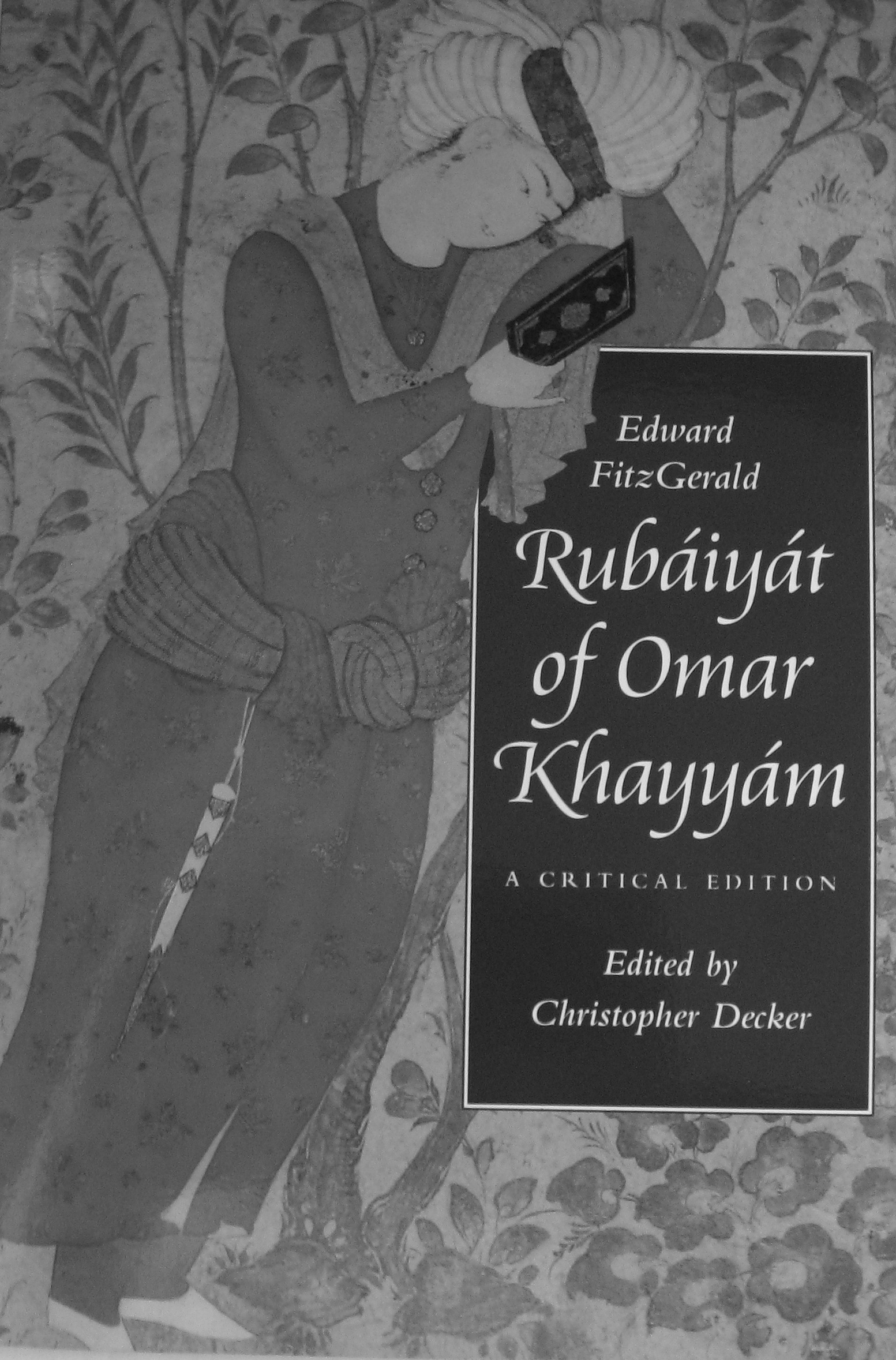
In 1965, when I was a young professor at the M.I.T. Sloan School, I wrote a paper with the title, “Markovian Decision Models for the Evaluation of a Large Class of Continuous Sampling Inspection Plans.” In June of 2009, I published a paper with the title, “Was Omar Khayyam a Golfer” in “Through the Green,” a publication of the British Golf Collectors Society. I leave it to you to characterize the arc of my writing career. Right now I’m more concerned with the arc of my drives! The golf parodies of Khayyam’s famous poem, “The Rubaiyat” are  explored more fully in the 7th Chapter of my new book, “Golf Course of Rhymes.”


post

The Essence of Golf in an Old Poem

Today (3/30) I drove by the local driving range and it was open! Always a good sign. And the afternoon temperature was above 50 degrees — another good sign. But the weather report warns of wet snow tomorrow night and Friday. And there you have it – early spring for the golfers of New England.

In the past at this time of year, I have offered spring celebration golf poetry, see “Another Golf Season Begins” and “A Springtime Exchange . . .” To start this golf season I would like you to read (out-loud and slowly if possible and more than once if you have the time) a poem “Ode to Golf” that gets at the essence of the game. The poem was written by Andrew Lang (1844 -1912), a prolific Scots poet, novelist, literary critic and appeared in a book titled, Ban and Arriere — A Rally of Fugitive Rhymes, published in 1894. [The poem makes several references to St. Andrews.]

Ode to Golf

‘Delusive Nymph, farewell!’
How oft we’ve said or sung,
When balls evasive fell,
Or in the jaws of ‘Hell,’
Or salt sea-weeds among,
‘Mid shingle and sea-shell!

How oft beside the Burn (stream),
We play the sad ‘two more’;
How often at the turn,
The heather must we spurn;
How oft we’ve ‘topped and swore,’
In bent and whin and fern!

Yes, when the broken head
Bounds further than the ball,
The heart has inly bled.
Ah! and the lips have said
Words we would fain recall –
Wild words, of passion bred!

In bunkers all unknown,
Far beyond ‘Walkinshaw,
Where never ball had flown –
Reached by ourselves alone –
Caddies have heard with awe
The music of our moan!

Yet, Nymph, if once alone,
The ball hath featly fled –
Not smitten from the bone –
That drive doth still atone;
And one long shot laid dead
Our grief to the winds hath blown!

So, still beside the tee,
We meet in storm or calm,
Lady, and worship thee;
While the loud lark sings free,
Piping his matin psalm
Above the grey sad sea

The old golf poetry, well represented in this Blog, time and again makes clear how timeless the game is. One drive “featly fled” will bring us back for another round, yesterday, today or tomorrow.

post

A Golf Poem with a Boston Accent

Grantland Rice

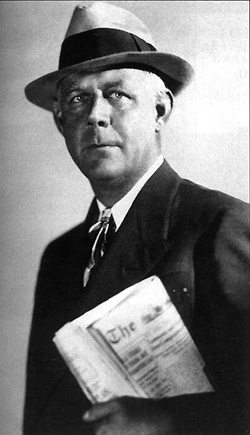
Grantland Rice wasn’t from Boston, he was born in Murfreesboro, TN in1880. And I don’t think he spent much time there. Nevertheless, in the following poem “Beating ‘Em To It” he somehow picked up at least a slight Boston accent. The poem appeared in The Winning Shot, a book written by Jerome Travers which I have mentioned in previous Posts. Rice’s poetry is sprinkled through out the book’s pages.

BEATING ‘EM TO IT

Yes Pal, I know just how it was–you should have won a mile;
You had him trimmed ten ways on form and twenty ways on style;
You had him stewed into a trance–you had him strung until
You went and blew a ten-inch putt where something tipped the pill;
A putt you wouldn’t miss again the whole blank summer long–
A pop-eyed pipe to anchor– am I right or am I wrong?

I get you pal–don’t say a word–he wasn’t in your class;
You had no less than twelve bad kicks that plunked you in the grass;
While you were straight upon the pin, he foozled every shot,
But somehow skidded on the green and gathered in the pot;
No not a word; I know, old top–your case is nothing new–
I know, because each time I lose they beat me that way, too.

Now that golf season has begun,keep the poem in mind when you have one of those matches or one of those days.

post

The Golfer’s Wife

If you search this blog, using “Wife” as the search term, you will find five Posts that one way or another characterize the golfer’s wife of about 100 years ago. In these early days when golf was becoming popular and affordable the men played and for the most part their wives did not. A popular description of such wives was (and still is) “golf widows.” Yesterday, while searching through a Google book called Humours of the Fray by Charles L. Graves (published in London in 1907) I found yet another poem with the subject as its title, “The Golfer’s Wife.”

As is often true in these poems, the golfer himself is subject to the poet’s ridicule, while the wife though suffering is clearly the “hero.”

THE  GOLFER’S WIFE

OF  perfect stamina possessed,
From centenarians descended,
Jones spends his lifetime in the quest
Of health-although his health is splendid.
Last year he throve upon a fare
Which  now he views with utter loathing,
And monthly he elects to wear
New hygienic underclothing.

His doctors order exercise,
Fresh air and healthy recreation;
And Jones assiduously tries
To combat physical stagnation.
Llandrindod welcomes him to-day,
To-morrow Droitwich  lures him brinewards;
Next week ’tis Bath, or Alum Bay,
Or  Bournemouth,  and he hurries pinewards.

At scholarship inclined to scoft,
Yet  fond of neither dogs nor horses,
Upon his diet and his golf
Jones focusses his mental forces ;
Unmoved by mountain  peaks sublime,
Or  ‘mid the most enchanting  greenery,
Because he’s musing all the time
On  his inside, and not the scenery.

To travel with this fearsome freak,
This  valetudinarian* loafer,  (*unhealthy)
I should decline, though for one week
He gave me all the gold of Ophir.
Yet  his self-sacrificing spouse,
All normal interests resigning,
Beneath her lifelong burden bows
Without  the semblance of repining.

With  him she trots from links to links,
Wearing  a smile of saintly meekness ;
With  him eternal cocoa drinks
Though  China tea’s her special weakness.
Nor  is her sympathy profound
Relaxed at luncheon or at dinner,
When  Jones reconstitutes each round,
And turns the tables on the winner.

Fine weather keeps him out of doors,
But when it rains or even drizzles
The  slightest moisture he abhors
Her fate is worse than patient Grizel’s*. (* A reference to the wife of Marc Antony)
For Jones exacts attentive  heed
To his malingering recital,
And poses as an invalid
When  Mrs. Jones deserves the title.

No chance of respite or reward
To her the future seems to offer,
Unless some random rubber-cored
Despatches this dyspeptic golfer.
Already shrunken  to a shred
By her devotion self-denying,
She perseveres, and when she’s dead
He’ll  blame her selfishness in dying.

Divines are wont  to disagree
Acutely in regard to Heaven,
Some doctors holding it to be
A single sphere, and others seven ;
But Jones’s consort entertains
No doubt about one crucial question ;
There will, upon the heav’nly plains,
Be neither golf nor indigestion.

Mr. Graves lived from 1856 to 1944. He was a prolific writer and poet. Among his books were a four volume set called Mr. Punch’s History of Modern England. Though I searched widely, I could find no other connections between Graves and golf beyond his poetry.

post

“He’ll yet a gowfer be.”


If you search my blog using the word “duffer” you will find 10 Posts out of a little over a hundred that include the term. Duffers are common on the golf course and in golf poetry as well. But what is the opposite of “duffer?” It might be the perfect golfer, except there are none. But that hasn’t stopped golf poets from musing about the possibility of playing perfect golf or what it might feel like to be a perfect golfer. In my book, Golf Course of Rhymes – Links between Golf and Poetry, I include several poems on golf perfection. I found another, this one on a duffer’s view of perfect golf, in a book called Divots for Dubs, privately published by J. Ellsworth Schrite in 1934.

The Par Buster

I pray that some day I might be,
Allowed to step up to the tee,
And there with all my friends to see,
I’d swing–so smooth and evenly
That they, who’ve seen me in disgrace,
Would marvel at my new-found grace.
And as the ball sailed straight and true,
I’d hear them murmur: “What hit you?”

With practiced calm I’d stand and stare,
And watch the ball sail thru the air.
And when it settled to the land,
My friends would grasp me by the hand
And mutter: “Gosh! I’ve never seen,
A drive hit so near the green.”
I wouldn’t strut–I’d trudge along,
Stilling my heart from its victory song.

My second, with an iron I’d hit,
With plenty of spin to make it “sit.”
Of course, I’d be allowed to grin,
When it rolled almost to the “pin.”
I wouldn’t have to use my putter,
For, “Pick it up”, I’d hear them mutter.
From every tee I’d drive them far,
On every green I’d laugh at par.

The rough, the traps, and all that stuff,
Would see that I was good enough
To guide my ball beyond their clutch,
I’d pass them by with hooks and such.
And when the course I’d travel o’er,
I’d let my caddy add the score.”
I wouldn’t faint nor shout with glee,
If he should look with awe at me.
But how we all would celebrate,
When he shouted–sixty-eight.

I wonder, would I lose the thrill,
Playing that well–perhaps I will.
Oh well, a day dream now and then,
Gives us hope–we try again.

So in the end it is not unreachable perfection, but the hope of getting better that drives us all. John Thomson, an Scottish lawyer, golfer and poet, put this idea to verse in 1893:

See yonder lads upon the links.
Go, find a duffer there but thinks,
For a'[all] the jeers and wylie winks,
He’ll yet a gowfer be.

post

“St Andrew’s Law” by Robert Browning

Much of the golf poetry in this Blog is straight-forward. You read it once, understand what the poet is trying to convey and respond with some kind of thought or emotion . . . or not. For the most part, the best of the golf-poets of the past were entertaining verse-writers who on occasion reflected their feelings for the game poetically.

A few of these poets went beyond verse writing and wrote at what might be described as a higher level. Their poetry requires more careful reading (not necessarily what Blog readers are looking for), but such reading can also be rewarding. One such golf poet is Robert H. K. Browning, a writer, golf magazine editor and golf historian who was active in the first half of the 20th century. His poetry has been included in my last two Posts.

I found Browning’s poem, “St. Andrew’s Law,” sub-titled “(With apologies to Rudyard Kipling)”, in a book called On the Green edited by Samuel .J. Looker, published in 1922. The reason for “apologies” is that the poem is a parody of Kipling’s poem, “Poseidon’s Law.” Both poems include warnings about lying while recognizing the inherent inevitability of stretching the truth, whether in a sailor’s tavern or clubhouse bar. I hope you will take the time to read “St. Andrew’s Law” out-loud . . . to fully enjoy Browning’s humor, his keen understanding of golfers’ foibles and his poetic skills.

St Andrew’s Law

(With apologies to Rudyard Kipling)

When prehistoric swipers sliced, and blamed the sloping tee,
They got so riled, Saint Andrew smiled, and “Blasphemers,” said he,
“Henceforth the lightly made excuse shall give you no resource;
Ye may not win to act or use of falsehood on the course.

“Let Peter judge his fisher folk, whose unexamined scales
Their easy consciences provoke to all-unswallowed tales;
But ye the prickly whin shall test, the bunker shall condemn:
The gods of golfing love to jest–but do not jest with them.

“Ye may not hope with putts untrue to reach the narrow tin,
Nor cozen [bamboozle] of their lawful due the bunker and the whin,
Nor tempt with drives that are not straight the slice-avenging rough,
Nor keep your ‘good’ strokes from the fate of stokes not good enough.

“But since the twisting ball that’s bent before the rising wind
Must always meet its punishment to tell you ye have sinned,
Be yours the frank unwavering eye, the open soul that shrinks
From any though of rotten lie–while ye are on the links.”

About the rugged moorland track on which his course was laid
The cave-man kept the law intact–until his game was played;
But once the last short putt was holed to crown his heart’s desire,
Audaciously mendacious [duplicitous] strolled the cave-man to his fire.

The prehistoric head of flint adorns our clubs no more,
But still the new clubs drive a-squint, exactly as of yore;
The prehistoric stone is now the radium-centred ball,
But ah ! the prehistoric man has never changed at all.

And driven in by rain or sleet, or by the Evening Star,
He moistly occupies his seat beside the clubhouse bar
And as or yore around Stonehenge, when golf was in its youth,
The swiper takes his great revenge upon the gods of truth.

If you have the time, you might find it interesting to look at Kipling’s poem and see just how Browning went about transforming a poem about sailors to one about swipers. And here is a website for help in understanding Kipling’s lines. But don’t worry, there won’t be a quiz.


post

Browning, Wordsworth and the Rules of Golf

As promised in my last Post, here is another poem written by Robert H. K. Browning, a golf writer, magazine editor, historian and poet of the first half of the 20th century. As a writer, Browning is most famous for his book, A History of Golf, first published in 1955 and still widely available.

Browning’s poem is titled “Wordsworth Re-worded.” On the surface, the poem is a reminder that your score, even on a meaningless hole, is governed by the rules of golf. Read the poem a couple of times and I’ll meet you below.

Wordsworth Re-Worded

An aged man,
Racked by a ceaseless cough,
And shivering in his wretched clothes,
What should he know of golf?

But when he saw me start to play
His sides he well nigh split;
He said, “I’ll take you round today
For the mere fun of it.” “

With strokes and misses, empty head,
How many have I had?” –
“You’ve taken seven to here,” he said.
His answer made me mad. “

And how d’ye think that that can be?” –
He answered, “Take my word;
Two strokes to knock it off the tee,
And bunkered from your third.

“And other two to get it out,
And also — here’s the rub —
Two more, because beyond a doubt
I saw you ground your club.”

“But this is not a match,” said I,
“For cups I do not strive;
And leaving out the penalty,
It seems I’ve taken five.”

“Two on the tee – and one – makes three” –
He checked them on his hand –
“Two to get out, and other two
For grounding in the sand.”

“But they don’t count; those two don’t count;
The slip must be forgiven.” –
Twas throwing words away, for still
That ancient man would have his will;
“I say you’ve taken seven.”

So, Browning’s poem leaves us with some questions. First, why the title with its reference to the famous romantic poet William Wordsworth (1770-1850)? Second, who is the “aged man?” Is he real or is the poem in some way about the conversation we have with ourselves when adding up the score during a bad hole? And third, did Browning really know a golfer who was this big a duffer? No doubt!

To answer the first question, we would need a Wordsworth scholar. From the title it would appear that the poem is a kind of a parody. Does anyone have any ideas? The aged or “ancient man” in the last stanza might represent the rule book which even a hundred years ago, when this poem was written, was old. The rules, as we have seen again recently, make no exceptions. Maybe Browning is using the poem to characterize the cruel reality of playing golf by the rules. What do you think? If you like, leave a comment as to how you read the poem.

post

Golf Poetry by Robert H. K. Browning

Robert Browning (1812-1889) was a famous English poet. Robert H. K. Browning (1884-?) was a scholarly golf historian from Scotland who was the editor of  “Golfing,” the premier British golf periodical, from 1910 to 1955. H.K Browning’s major claim to fame is his book, “A History of Golf,” which the late Herbert Warren Wind described as “…far and away the finest one-volume history of golf.”

But like the earlier Browning, Robert H. K. Browning was also a poet, thought he limited his subject matter to golf. Samuel L. McKinlay, another noted Scottish golf writer, wrote in the Afterword to the Classics of Golf’s edition of Browning’s book:

One good critic thought Browning’s light verse among the best of his generation, but it was so widely scattered among different periodicals as to defy any attempt at collection.

McKinlay singled out “The Pilgrims’ Progress” as one of Browning’s longest and best poems. The poem “describes in rhymed couplets the exploits of four London golfers who set out ‘to golf all August around the North.'” McKinlay then provides what he described as “some lovely lines” from the poem:

Then off through Dirleton, cool and shady,
To Muirfield, Archerfield, Aberlady.
They golfed at Gullane, on ‘One’ and ‘Two’
They played Longniddry and Luffness New.

And at St. Andrews, they

Laughed in the ‘Beardies’, despaired in ‘Hell’,
But played the first and the last quite well.

McKinlay, being a West of Scotland man, cites his favorite lines,

Troon and Prestwick–Old and ‘classy’–
Bogside, Dundonald, Gailes, Barassie.

I wonder if anyone could provide me with a reference to the entire poem? But even just these few lines make me wish I could have tagged along with the London foursome.

In my next Post, in two weeks, I will return to Robert H. K. Browning’s golf poetry.