post

Six Tweets to Better Putting

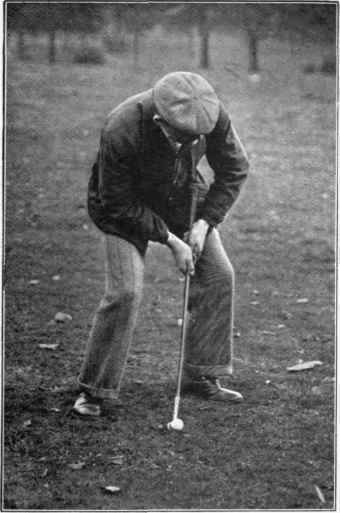
J. H. Taylor putting

There seems to be general agreement that the first printed book of golf instruction was The Golfer’s Manual, By a Keen Hand, written by H. B. Farnie and published in 1857. Since then instruction has grown to be one of the major products of the golf industry. These days it is still packaged in books, but also in magazines, newspapers, advertisements, blogs, videos, YouTube clips and tips. In addition, instruction is sold to individuals and groups by thousands of teaching pros.

But in today’s busy world, there is a need for the “short and sweet” in golf instruction. With that in mind I offer a 12 line verse that packages the essence of what you need to know to become a better putter. And if you are put off by poetry, just think of this guide as six putting tweets.

Six Tweets to Better Putting

Line up and trust when putting
Head still a must when putting

A rhythmic swing
Is just the thing when putting

Get rid of fear
At least be near when putting

All are agreed
The first rule is speed when putting

Consistency
The foremost key when putting

The best advice
Don’t think twice when putting.

Leon S. White, March 2010

post

The “Rubaiyat’s” Contribution to Golf Poetry

To write a parody of a poem, you would take the basic characteristics of the verse (for example, its rhyming scheme and basic idea) and then rework them for comic or ironic effect.

Now suppose that you are a young golfer and poet around the turn of the 20th century. Being literate, you are aware that Omar Khayyam’s poem, Rubaiyat, is being parodied left and right. So one day, after being around the golf course until early evening, you pick up a copy of the poem (it was easy to do then). Reading through the verses, you are struck by the stanza 27,

Myself when young did eagerly frequent
Doctor and Saint, and heard great Argument
.     About it and about;  but evermore
Came out by the same Door where in I went.

If your name was Henry Boynton, a graduate of Amherst with a Masters of Arts, then, looking at the stanza you might have thought about all the controversies regarding the fundamental of golf being discussed by golfers such as Jamie Anderson and Jamie Braid and all the other Jamies of the time. And this might have led you to write (as part of a book, The Golfer’s Rubaiyat),

Myself when young did eagerly frequent
Jamie and His, and heard great argument
.     Of Grip and Stance and Swing; but evermore
Found at the Exit but a Dollar spent.

Little did Boynton know, but he himself would be parodied by later golfing poets.

In the July 1910 issue of  The American Golfer, a poet named Jack Warbasse wrote,

Myself when young did eagerly frequent
Travis and Braid, and read great argument
.     About the Grip and Stance; but evermore
Play’d out by the same Stump where in I went.

And then in 1919, a Scottish writer, poet and drama critic Robert K. Risk published a book of collected poems, Songs of the Links, that included the poem “The Golfaiyat of Dufar Hy-Yam.” In that poem we have,

Myself when you did eagerly frequent,
Club-makers’ Shops, and heard great Argument
.     Of Grip and Stance and Swing; but evermore
Learned and Bought little I did not repent.

Finally, in 1946, J. A. Hammerton, a Scottish statesman and author, published a book, The Rubiayat of a Golfer, in which he wrote,

Myself when young would hopefully frequent
Where Pros and Plus Men had great argument
.     On Grips that overlapped, on Swing and Stance
But came away less hopeful than I went.

So what have we learned? First, that there are limits to the golfing parodies of stanza 27 of the Rubaiyat. And second, Instruction about grip, stance and swing has been confusing for a long time!

post

A Rare Golf Poetry Book

124510c

Those of you who have been following this blog know that most of the poetry is from old golf books and magazines. Part of the fun of writing the blog is finding new (old) books which provide me with new material.  Brian Siplo (co-author of a wonderful book about Harry Vardon’s first trip to the U. S., called The Vardon Invasion) recently told me about some old golf poetry books. With a bit of luck, I was able to buy one of them called Divots for Dubs through Abebooks. The 96 page book was written by J. Ellsworth Schrite who self-published it in 1934.

The book  explains in verse, how to play golf. The author makes this very clear in his charming introduction,

Divots for Dubs

“DIVOTS FOR DUBS” explains in verse,
How to play golf, better or worse;

The history, the course, the clubs to choose,
The stance to take, the swings to use;

What to wear, and where to look,
How to slice, and how to hook;

Things that on each course are seen,
Things you need to play “Nineteen”;

A bit of humor, a bit of sense,
Some alibis for self defence:

Get your “Divots”, take a look,
You miss a “par” if you miss the book.

If you want to read on, however, you will be challenged. According to WorldCat only four libraries in the world have it! But that’s also part of the fun I have: bringing inaccessible golf poetry back to life in this blog.

post

The Epic of a Chronic Slicer (Continued)

GD00000884_LARGE

The previous Post (October 26th) introduced the epic of  “Frenzied John.” The poem, a painful description of a chronic slicer, was left unfinished by Bert Leston Taylor, maybe for good reason. It was included in an article in the June 1926 issue of The American Golfer. The article also included a proposed ending. In addition, readers were asked to write their own endings and submit them to possibly win a prize. The ending that was included is as follows:

FRENZIED JOHN (proposed ending)

And Then

He tried the left side pivot,
Although he found it pained;
He turned his knee in from the tee
But still the kink remained.

He thought of weight and balance,
By toe and then by heel;
With shifting stance he did his dance,
But still they heard him squeal.

He sought a new instructor,
And seemed to be O. K.
But left alone, they heard him moan—
“I’m off again today.”

He bought a spoon and mashie
To help correct the ills;
They both felt great, but sad to state
They would not whang the pill.

His neighbors fled in panic
When he came off the course;
His wife in tears was game for years
And then grabbed a divorce.

He tried a slight pronation,
And said—”I’ve got it now”—
But by next day it went away
And furrows creased his brow.

“Perhaps,” he said, “I’m dipping
My shoulder down too far”:
He held it up, but missed the cup
And never got a par.

“I’m through,” he yelled in fury;
“I’m through for good—You’ll see”;
He quit a week, then grabbed his cleek
And hustled to the tee.

He tried the upright system.
Until I heard him curse;
And yet his game was not the same,
For it grew worse and worse.

In my view, Taylor’s unfinished poem is long enough and just needs maybe two more stanzas to bring it to a close. With that in mind I composed the following. (Note that the first stanza is Taylor’s last and then my two follow.)

My Proposed Ending

He laid the club-face forward,
He laid the club-face back.
His face grew thin, his chest fell in,
His mind began to crack.

He slumped but then remembered.
There was one other book.
He read it quick, and grabbed his stick
Ye gads no slice, a hook.

The moral of the story,
Grasp it ‘fore it’s too late.
Off the tee, ‘tween you and me,
It’s hard to hit it straight!

post

The Epic of a Chronic Slicer

244343-main_Full

Bert Leston Taylor (1866-1921), who wrote a column for the Chicago Tribune under the initials BLT, wrote a poem with the title “Frenzied John” which he never finished. In June 1926, The American Golf published an article with the unfinished poem and offered a prize of two dozen golf balls to the reader who best finished the poem in ten stanzas or less. I searched later issues of the magazine in vain trying to find the winning entry. Here is the poem (slightly shortened), as far as it goes.

FRENZIED JOHN

He worked as hard at golf
As any man alive;
For  nothing went the time he spent—
He always sliced his drive.

He held himself like this,
He held himself like that;
By hook and crook he tried to look
And see where he was at.

He changed his stance and grip—
It mattered not at all:
The same old thing with every swing,
He sliced the bally ball.

He put his right foot forward
He put his right foot back;
But still his game remained the same—
He sliced at every crack.

He told it to the lockers,
He told it in the hall,
Till more and more it grew a bore
To hear he sliced the ball.

He read the books of Vardon
Of Taylor, Braid, and all;
But every shot went straight to pot—
He sliced the cursed ball.

He went to Doctor Vardon,
And got the best advice;
He whaled the pill till he was ill,
Nor ever lost his slice.

Doc took him out to pasture,
And showed him what to do,
And while the Doc was there to knock
He hit them fairly true.

But after Doc departed
The stuff was off again;
He shot it on to Helngon,
And nearly went insane.

No matter how he whacked it,
He sliced into the tall.
“O Lord, how long,” his frenzied song;
“How must I hit the ball?”

Again to Old Do Vardon
He tottered for advice.
Said Doc: : “We’ll have to operate
And cut away that slice.”

He put his right hand under,
He put his right hand up,
But still the ball would hunt the ball,
Nor ever reach the cup.

He put his heels together,
He put his heels apart.
With anguished brow he wondered how
He’d ever learn the art.

he laid the club-face forward,
He laid the club-face back.
His face grew thin, his chest fell in,
His mind began to crack.

If you would like to enter the contest, it’s too late to “Please mail all answers to ‘The Contest Editor,’ AMERICAN GOLFER, 353 Fourth Avenue, New York, N.Y.”  But you can leave your ending as to what became of Frenzied John in a Comment below.

In the next post, I will provide the ending that the magazine included in the article. Yours may be better.

post

Some Four Line Observations on Golf

Short poems have their place as well. This week I offer a few four liners in hopes that one or two may linger with you for a while.

From a 1901 issue of Golf Illustrated, an observation made more specific many years later by Bob Toski’s question: Where would you rather be on your drive, in the rough, or 15 yards shorter but in the fairway?

Good people of every sort
Come listen to my song,
‘Tis better to be straight and short
Than to be crooked and long.

From an 1891 issue of Golf, a timeless truth,

Golf without cessation
Brings naught but vexation;
Golf in moderation
Is pleasant recreation.

From a poem, “The Wicked Fairy” by Reginald Arkell,

I hit the ball as clean and true
As any decent pro would do;
I mark the line, I watch it fall —
And then it isn’t there at all.

Two four-liners written by Bert Leston Taylor (1866-1921), an American columnist, humorist, poet, and author. who wrote a column for the Chicago Tribune from 1901 to 1903 and then again from 1909 until he died.

RAIN

The rain is raining all around,
It falls on turf and tee;
But I don’t care how wet I get—
I made that hole in three.

WHOLE DUTY OF GOLFERS

A golfer, when he plays with you,
Should speak when he is spoken to,
And keep his score card free from fable;
At least so far as he is able.

And four lines offered anonymously, in the form of a stanza from the Rubaiyat by Omar Khayyam, that take up where Taylor’s four lines left off,

GOLFAIYAT

Some take a Brassey when they play the Game
Or with a Cleek carve out the way to Fame;
And some there be who but a Pencil Stub
Have used, and yet have Got There just the Same.

(From Lyrics of the Links by Henry Litchfield West, p. 58)

Finally, four lines that I wrote in answer to all those Titelist ball ads,

BEST BALL

The Pro V-1 from Titleist
The pros who play it do insist
With length and spin it beats them all—

Except for someone’s Nike ball.

post

Advice on Putting in Prose and Poetry

Fig-40-PUTTING-OFF-THE-LEFT-LEG-MR-l-AIDI-AY-ADDRESSI

In last week’s Post I included a poem, “Dedicated to the Duffer” from a book, The Winning Shot, by Jerome Travers and Grantland Rice published in 1915. But what is “the winning shot?”  According to Travers, who won the U.S. Amateur Championship four times and the U.S. Open once,

“Undoubtedly “the winning shot” in golf is the putt. There can be no question about it.”

Travers later on in the chapter continues,

“We all know that there is less of the physical and more of the psychological in putting than in any other part of golf. To be putting well the golfer must have absolute control of his nerves…”

Travers ends the chapter with “a few condensed suggestions” to improve your putting:

  1. Stand well over the ball and keep your head still.
  2. Keep your eye on that ball and don’t move your body.
  3. Cut out the jab or the stab, learn the pendulum swing, and get a follow through with the club.
  4. Cultivate, in practice as well as play, the knack of being a trifle beyond the hole if you miss. Make a steady practice of giving the ball a chance.
  5. Cultivate the habit of concentration.
  6. Cultivate the habit of confidence and determination, for mental faults can be improved as well as physical ones.
  7. And then practise putting wherever and whenever you get the chance.

Remember these words were written almost 100 years ago. They hold up well when reading the modern gurus Pelz, Utley, Rotella and Valiante.

And yet, as the following poem suggests, when you compare all the words of wisdom regarding putting, the result is more often confusion than improvement.  [Read more…]

post

Golf Instruction With Illustrated Poetical Positions!

image0-1image0

image0-2

FORE

Fore, lads! Keep out o’ the line o’ fire,
And I’ll teach ye to drive a ba’,
That’ll flee to the clud, and fa’ wi’ a thud,
Twa hundred yards awa’.

Ye maunna (must not) be stridin’ your legs ower wide,
Like a puddock (frog), across the green,
Nor be haudin’ your elbows pinned to your side,
And lettin’ your nails be seen.

And dinna be bendin’ your chin to your knees,
At an angle o’ forty-five,
Nor wrigglin’, as if ye were treadin’ on peas:
Keep your energy a’ for your drive.

Fix your e’e on the gutta, stride fair, feet square,
Elbows free, gie (give) your back a bit thraw (a small turn)
Heel up; swing your club round the nape o’ your neck,
Whish, click, and the ba’s awa’!

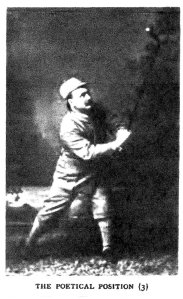
The above, in a slightly different format, appears on page 503 of the Rev. John Kerr’s The Golf-Book of East Lothian published in Edinburgh in 1896. This is clearly an early example of illustrated golf instruction so common in today’s golf magazines and instruction books. But it is surely unique in its description of the three “poetical” positions. The poet was A. P. Aitken, D. Sc., lecturer on Agricultural Chemistry at the U. of Edinburgh and member of the Gullane Golfers, an East Lothian golf club formed in 1868.

Kerr’s book was the first to be written about a golfing area or club. Decent first edition copies are rare, often selling for well over $1000 when available. Joseph Murdoch points out in his book, The Library of Golf 1743-1966, that the first action pictures (not posed) appeared in How to Play Golf by H. J. Whigham published in Chicago in 1897.

post

Be a Happy Golfer; Just Play and Have Fun

The-Happy-Golfer

Here is a list of golf books that you might consider to help you improve your game:

The Happy Golfer by H. Leach
Advanced Golf by J. Braid
How to Play Golf by H. Vardon
Golf Faults Illustrated by J. H. Taylor
Golf for the Late Beginner by Henry Hughes
The Golfer’s Pocket Tip Book by G. D. Fox
Modern Golf by P. A. Vaile
Success at Golf by H. Vardon, F. Ouimet, and others.

Though their titles look current, these books were included in an advertisement in the September 1914 issue of the magazine Golf/USGA Bulletin. The first golf instruction book published in the U.S., Golf in America: A Practical Manual, by James Lee, appeared in 1895.

 Of course, if instruction books don’t help enough, you can always take lessons from a Professional. And neither lessons or books will help much if you don’t practice. But then Malcolm Gladwell in Outliers tells us that 10,000 hours or more or practice are needed to excel. What to do? [Read more…]

post

“The Apple-faced Sage” and Two Enduring Swing Principles

In an earlier post, I included several stanzas from a poem by  Lord Darling called “Keep Your E’e on the Ba’.” While Darling limited his advice to a few lines of verse, Horace Hutchinson (1859-1932), 15 years Darling’s junior, published the first popular book of golf instruction, Hints on Golf in 1886. The book is described on the Classics of Golf website as “The first mass-produced instruction book in the history of golf, the 14 editions of this book are credited with popularizing the written word as a viable means of teaching.” In the Classic of Golf edition, Hutchinson is described as “undoubtedly the first Englishman to become an important figure in the game of golf,” by Herbert Warren Wind, American’s greatest golf writer.Besides being first, Hints on Golf may be the only instruction book ever to employ verse to emphasize important swing principles. Hutchinson writes,

HH 1903

Horace Hutchinson 1903

“The head must necessarily be steady, for it is most important that you should keep your eye fixedly on the ball from the moment that the club -head is lifted from the ground until the ball is actually struck. [Then following Darling} ‘Keep your eye on the ball,’ should be your companion text to ‘Slow Back.’ A golfing poet writes of

The apple-faced sage, with his nostrum for all,
‘Dinna hurry the swing! keep your e’e on the ball!'”

Next time you step up to the tee you might startle the members of your group by reciting the words of “The apple-faced sage”as part of your pre-shot routine!

But two questions remain: Who was this Scottish mentor? And who was the “golfing poet” who immortalized his versified advice? With the help of Google I can report the following: [Read more…]